
Rethinking “Ujamaa” and Diversity in Tanzania
This article examines the enduring impact of Tanzania’s Ujamaa policy on the management of diversity and the trajectory of democratic development. Ujamaa, initiated by President Julius Nyerere in 1967, was designed to cultivate national cohesion and egalitarianism by adopting socialist principles and centralizing political authority. Although the policy was formally abandoned in 1991 when Tanzania restored multiparty democracy, its influence remains deeply embedded in the nation’s political structures and constitutional development. Employing a historical analysis, the article demonstrates that Ujamaa’s legacy continues to shape contemporary attitudes toward ethnic pluralism and the distribution of political power. To promote robust democratic governance and accountability, the article advocates for comprehensive constitutional reforms, extensive civic education initiatives, and sustained inter-party dialogue, emphasizing inclusivity and participation.
Introduction
Following the dissolution of French and British colonial rule in the 1950s and 1960s, socialist ideologies gained prominence in countries including Tanzania, Zambia, Senegal, and Ghana. Specifically, Tanzania introduced “Ujamaa,” a form of socialism, which stands as one of the most ambitious state-building initiatives in post-colonial Africa. Originating in the 1950s and formally institutionalized by the Tanganyika African National Union (TANU) from 1967 until the 1980s, Ujamaa was predicated on principles of equality and social justice, operationalized through collective ownership and the equitable allocation of resources. Yet amid the economic crises of the 1970s and the implementation of Structural Adjustment Programs, the ruling Chama Cha Mapinduzi (CCM) Party abandoned socialism in 1991, transitioning instead to a market-oriented economy. Despite this ideological shift, the persistence of this legacy is visible in the Constitution, especially Article 9 and clause 9(j), which continue to reflect Ujamaa’s egalitarian vision by discouraging the concentration of wealth and major productive assets in the hands of a few. This constitutional inheritance shows that the struggle over democracy, equity, and power distribution in Tanzania is not a new development but part of a longer unresolved legacy. Scholarship addressing contemporary understandings of these legacies among Tanzanians remains relatively scarce, despite socialism’s profound historical influence.
This article argues that while the Ujamaa project succeeded in forging national cohesion and mitigating ethnic fragmentation, it did so through a centralized political order that concentrated authority and constrained democratic pluralism.
Ujamaa as an Ideology and a Policy
Ujamaa, introduced by Tanzania’s former President Julius Nyerere in the late 1950s and outlined in his essay “Ujamaa – the Basis for African Socialism” (1962), became official policy with the Arusha Declaration of 1967 under TANU. Like other forms of African socialism, Ujamaa emerged as a response to the colonial legacy of economic exploitation and artificial borders imposed by European powers, which led to poverty and ethnic divisions. Ujamaa, as an ideology, aimed to foster national unity and development, grounded in equality, freedom, and unity. The ideology also envisioned Tanzania as a self-reliant socialist nation. Ujamaa remained embedded as a policy in Tanzania’s 1977 Constitution, which called for building a nation of equal and free individuals through socialism and self-reliance, prohibiting economic activities that concentrate wealth and resources among the few. Ujamaa is also affirmed as the policy of the ruling party, CCM, according to Article 4(3) of its 1977 Constitution. In 1999, a committee led by Judge Robert Kisanga found that 88.8% of Tanzanians supported keeping ‘Ujamaa’ in the constitution as a guiding national vision. However, the committee noted that “Ujamaa,” as a one-party ideology, conflicted with the basis of multiparty democracy. In 2013, Judge Joseph Warioba’s Constitutional Review Commission recommended removing “Ujamaa.” Consequently, the proposed 2014 Constitution did not include “Ujamaa” as a guiding framework of state ideology, marking a significant shift from earlier constitutional visions. This change reflected evolving attitudes toward national ideology and democratic governance in Tanzania.
Institutional Legacy of Ujamaa on Contemporary Diversity
On ethnic diversity
Political elites have historically sought to construct cohesive nation-states by fostering shared values, collective identities, common languages, and implementing practices such as population resettlement. Unlike countries such as Botswana, Uganda, Kenya, Ghana, Zambia, and Malawi—where ethnicity and traditional authority remain deeply embedded in governance—Tanzania’s nation-building project viewed chieftaincy as divisive. While chieftaincy remains central in some African states, such as Ghana, Uganda, and Cameroon, Tanzania, with its roughly 120 tribes, abolished chieftaincy soon after independence to foster national unity. The move was widely welcomed, as many Tanzanian chiefs had been appointed by colonial authorities to serve colonial interests. President Nyerere integrated these prominent chiefs into government roles, including as ministers and ambassadors, to ensure their continued service while promoting unity.
Tanzanians remain cautious of ethnic-driven conflict, as seen in neighboring countries like Kenya, Uganda, Burundi, and Rwanda, where ethnicity has repeatedly fueled post-election violence. The 1977 Constitution of the United Republic of Tanzania prohibits any institution or political party from discriminating on the basis of ethnicity, region, race, religion, or social background. However, the reintroduction of multiparty politics in 1992 reopened space for competitive politics, especially at the local level. Politicians have since begun leveraging ethnic ties for support, marking a shift in Tanzania’s political landscape. Ethnic-based identity politics is now experiencing a resurgence and is becoming increasingly normalized, particularly during electoral periods. This trend is evident in the strategic deployment of regionalism and zonal politics, as well as in the ceremonial restoration of chieftaincy institutions across various regions of the country.
The implications of this experience are twofold. First, it reveals the limits of Ujamaa as a nation-building project: while it succeeded in suppressing overt ethnic fragmentation and promoting a strong sense of national belonging, it did so through a highly centralized political order that left little room for pluralism, local autonomy, and open contestation. Second, it shows that democratisation in Tanzania has unfolded on top of unresolved institutional tensions inherited from the one-party era. The introduction of multiparty politics did not erase these tensions; rather, it exposed them by reopening political space in which ethnic, regional, and other identity-based loyalties could re-emerge as useful instruments of mobilisation. In this sense, the rise of identity politics is not simply a new problem, but a return of suppressed social and political differences that had long been contained by state-building. These developments suggest that Tanzania’s democratic transition has been constrained by the paradox of its own success. The very institutions that helped create national cohesion also weakened the institutional foundations for pluralism.
On Centralized One-party Dominance and Constitutional Hegemony
After achieving independence, Tanzania established a multiparty democracy. Under Nyerere, TANU won all seats during the pre-independence elections. However, the Republican Constitution of 1962 marked the genesis of a monolithic political system. The president at that time became the head of state, government, and commander-in-chief of all armed forces. It should be noted that this was the first major tendency towards power concentration and centralization by the post-independence government. Apart from that, the president could dissolve parliament at any time they wished, without consultation or explanation.
In 1965, Tanzania constitutionally became a one-party state. Section 3 of Article 3 of the 1965 Constitution stated that all political activities in Tanzania, apart from that of the organs of the state of the URT and Zanzibar, should be conducted by or under the auspices of the party. Furthermore, in 1975, the party became supreme. Article 3(3) of the Constitution provided that all political activity in the country and that of the organs of the state of the URT should be conducted by or under the auspices of the party. This political shift galvanized association life. Civil society, trade unions, and cooperative unions were weakened and made appendages of the party. The adoption of the Arusha Declaration and the Ujamaa policy further consolidated the ruling party’s hegemony. In implementing this policy, villagization was also carried out to settle populations in villages. This, however, was carried out by force. Schneider posits that “Not only did the policy of enforced ujamaa/villagization fail to improve the material conditions of Tanzania’s rural population, but the adoption of coercive means to further it also points to the authoritarian side of Nyerere’s rule.” Furthermore, villagization affected ethnic relations, as the creation of villages mixed different groups.
In 1992, Tanzania established a multiparty democracy. Since then, the country has conducted its general election every five years. The transition to democracy has been slow, following a top-down model in which the ruling party and its government have managed the outcome. Despite several reforms (such as allowing the existence of a multiparty system, universal suffrage, and a bill of rights), some political parties and other stakeholders have persistently demanded a new constitution supporting democratic safeguards. The Tanzania Election Monitoring Committee (TEMCO) explicitly maintained that the new pluralist system inherited “a wrong constitution suited to a monolithic system,” and that “the writing of an entirely new constitution rather than patching up the one-party constitution as the CCM government has been doing,” was necessary to reinvigorate democracy. In response, Tanzania began writing its new constitution in 2011, but the process stalled in 2014.
Ujamaa embodied enduring contradictions on national unity, constitutionalism, and democracy: it forged national unity by suppressing ethnic fragmentation, yet did so through coercive centralization; it promised equality, but relied on authoritarian controls such as one-party dominance and forced villagization; and it delivered stability, while narrowing democratic participation and weakening plural institutions. Its legacy is therefore both integrative and exclusionary. Addressing these institutional legacies requires reforms that preserve the achievements of national cohesion while expanding constitutional checks, a robust democratic culture, and democratic accountability.
Policy Suggestions
Constitutional reforms are important to be undertaken given the legacies of Ujamaa and its attendant power distribution in a multiparty democracy. The Tanzania Development Vision 2050, the CCM’s Manifesto 2025-2030, the Long-Term Perspective Plan 2026/27-2050/51 as well as the Presidential Commission of Inquiry into Incidents of Breaches of Peace during and after 29 October 2025 indicate the need for Tanzania to have a new constitution in place by 2028. The new constitution is expected to build a more democratic society and prevent recurring legitimacy crises. Ujamaa, as an ideology that cherishes equality of human beings, should inform inclusive and vibrant political participation, contrary to the 2014 stalled constitution-making process, which demonstrates the limits of elite-driven reform. The following policy recommendations aim to foster an inclusive, resilient, and accountable democratic system:
Firstly, the government should establish an inclusive constitutional review mechanism. The launch of a participatory constitution-making process should involve all major stakeholders, including marginalized groups, civil society, the government, and opposition parties. A new constitution should enable substantive legal reforms to protect rights, ensure the integrity of elections, and solidify the rule of law as the basis for democratic governance. Kenya serves as a complex yet exemplary case study in the participatory drafting of a foundational legal framework. Kenya demonstrates both the possibilities and limitations of participatory constitutional reform in post-crisis democracies. Following the political violence that erupted after the disputed 2007 presidential election, political leaders, civil society organizations, and international mediators negotiated the National Accord, which paved the way for a comprehensive constitutional review process. The resulting 2010 Constitution is widely lauded across the continent as a paradigm of constitutional democracy, characterized by its robust protection of rights and institutional checks such as reducing executive overreach, decentralizing power, strengthening judicial independence, and improving electoral accountability. Nevertheless, Kenya’s experience also demonstrates that constitutional reform alone cannot guarantee democratic consolidation, as effective implementation ultimately depends on political will, institutional capacity, and continued public oversight.
For Tanzania, a similarly inclusive constitutional review process could preserve the social cohesion and national unity achieved under Ujamaa while addressing its democratic shortcomings. By redistributing political authority, strengthening independent institutions, and expanding opportunities for meaningful citizen participation, constitutional reform would help transform the legacy of centralized one-party rule into a constitutional order that is better equipped to support pluralistic and resilient democratic governance.
Secondly, constitutional reform must be complemented by promoting a democratic culture through civic education. Tanzania must address its single-party legacy by implementing widespread civic education. This will instill democratic values, inform citizens of their rights and duties, and encourage active political participation, all of which are vital for accountable governance and democratic consolidation.
Finally, these institutional and societal reforms should be reinforced through stronger mechanisms for inter-party dialogue. This can be achieved by expanding and formalizing platforms like the Tanzania Centre for Democracy to include all registered parties, and by ensuring adequate resources and capacity. Robust inter-party dialogue is essential for resolving disputes, building consensus, and supporting democratic pluralism.
Conclusion
Tanzania’s experience with Ujamaa exhibits complexities of managing diversity and building democratic institutions. The abolition of chieftaincy and efforts to suppress ethnic identity under Ujamaa fostered national unity and political stability, distinguishing Tanzania from its neighbors. Paradoxically, these measures also produced a centralized political system that limited pluralism and civic participation. The gradual transition from single-party rule to multiparty democracy has been shaped by the enduring legacy of Ujamaa, with reforms often managed from the top by the ruling party. As stakeholders in Tanzania still demand reforms, completing the stalled constitution-making process is crucial to address legitimacy concerns and strengthen democratic governance. Embracing inclusive constitutional reform, promoting civic education, and deepening inter-party dialogue will be key to building an accountable, resilient, and inclusive democracy that honors the spirit of Ujamaa while adapting to contemporary challenges.
. . .
Alexander Makulilo is a Full Professor of Political Science and the holder of the Mwalimu Julius Nyerere Professorial Chair in Pan-African Studies at the University of Dar es Salaam. He has published extensively in political science, with a particular focus on democracy. He also serves as Editor-in-Chief of The African Review: A Journal of Politics, Development and International Affairs.
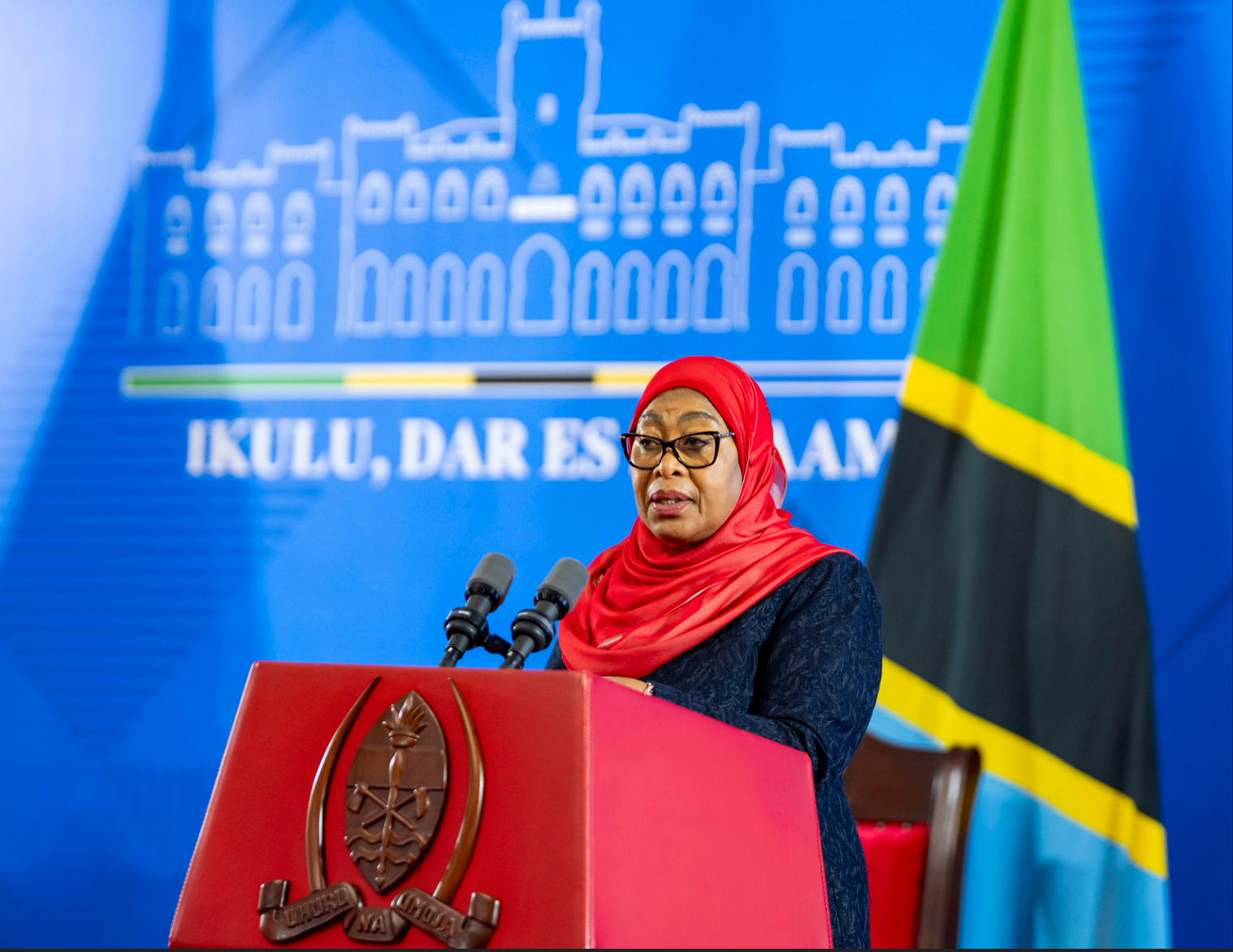
Image Credit: “Working Visit to the United Republic of Tanzania | Dar es Salaam, 3 May 2026” by Paul Kagame, CC BY-NC-ND 4.0, via Flickr