
Malaria, Forest Loss, and Sociopolitical Stability in the Amazon
This article argues that malaria resurgence in the Amazon is driven as much by failures in environmental governance and land-use policy as by any remaining gaps in health systems. It examines the long-term consequences of resurgence, traces the link between deforestation and transmission, and outlines policy pathways to realign malaria control with ecological realities.
In the early 2000s, a coordinated regional effort put malaria elimination in Latin America within reach. Today, malaria cases are rising again in the Amazon, despite expanded access to diagnostics, treatment, and surveillance. This resurgence reflects a widening gap between health strategies, commensurate funding, and the ecological realities shaping disease risk more than a failure of biomedical tools.Concentrated in Indigenous territories, new malaria outbreaks share the aggravating factors of limited state presence, threats to land tenure, and illegal resource extraction leading to widespread deforestation.
Nowhere is this relationship—and the opportunity to address it—clearer than in Brazil. To prevent malaria transmission and long-term damage, public agencies and regional organizations must more effectively integrate environmental protection into public health planning and vice versa.
Long-Term Consequences of a Temporary Resurgence
Malaria is a severe tropical fever carried by the Anopheles mosquitoes, endemic to warm and humid regions close to the equator that are ideal for heavy mosquito activity. While historical efforts have reduced malaria incidence considerably, the malaria parasite is highly efficient and does not require many new cases to rebound and spread. Lapses in prevention, control, and treatment give parasites and host mosquitoes alike time to develop resistance to biomedical treatments, dampening the effectiveness of existing initiatives to decrease mortality and eliminate malaria in the long run, even once funding or services are restored. As a result, temporary interruptions in such efforts can lead to disproportionate reversals in progress toward malaria elimination. Moreover, children who contract malaria during these lapses face a permanently elevated risk of succumbing to other ailments or struggling with long-term disability, such as severe anemia, kidney disease, and neurological impairments, which can also strain healthcare systems in the long term and undermine future efforts.
The consequences of such lapses extend beyond direct health impacts. Malaria outbreaks disrupt livelihoods, increase household health costs, strain under-resourced health systems, and reduce economic productivity in regions already facing structural disadvantages. Over time, repeated outbreaks raise the cost of malaria control and erode the economic foundations needed to sustain elimination efforts. As authorities divert resources toward emergency response, investment in prevention declines and public confidence in health systems and governing institutions weakens, further complicating long-term control efforts.
These burdens are not evenly distributed. They are instead most prominent in what the health sector calls the “last mile” and extractive industries call the “first mile.” The former refers to areas where some of the world’s most remote populations, with limited access to public health resources, live; the latter refers to zones that host dense stocks of natural resources used commonly in consumer products. The Brazilian Amazon exemplifies the overlap of these two concepts, home to numerous Indigenous groups, gold that stocks the U.S. Mint, and wood popular in decking. As a result, Amazonian communities—who have long stewarded the remote land and resources that provide raw materials for domestic, regional, and global supply chains—bear disproportionate impacts from malaria.
Environmental Drivers of Malaria Transmission
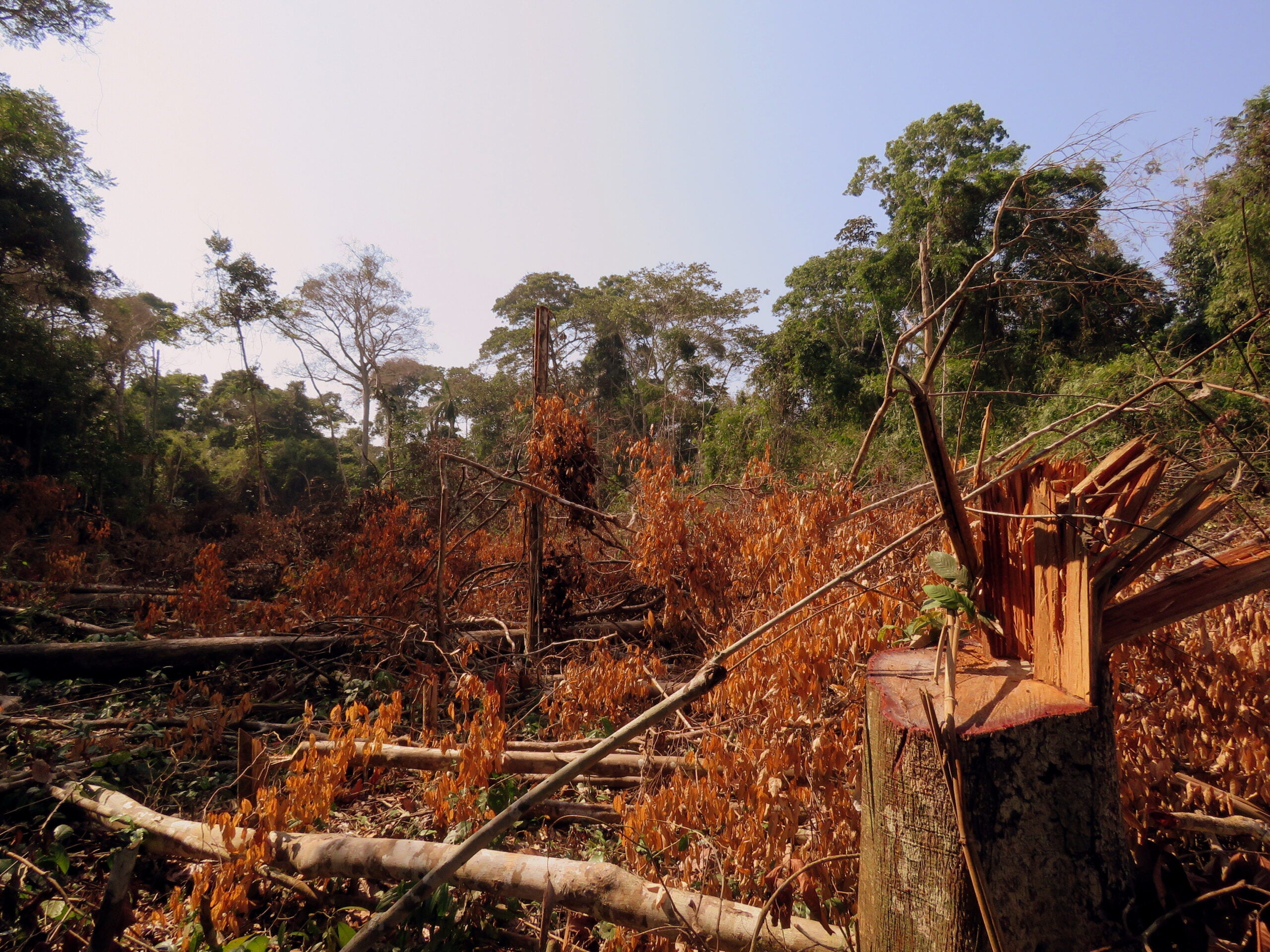
In parts of the Amazon, a one percent increase in deforestation is associated with a roughly six percent increase in malaria incidence within a month as illegal gold mining, logging, road construction, and frontier expansion disturb forest ecosystems in ways that favor malaria-carrying mosquito species. Canopy loss spikes temperature and humidity while exposed soils and disrupted hydrology create sunlit pools of standing water ideal for mosquito breeding. At the same time, extractive activities draw in mobile workforces with limited immunity and inconsistent access to healthcare, accelerating malaria transmission risk. As a result, even marginal increases in mining activity are associated with substantial increases in malaria transmission one to two years later.
The relationship between illegal extraction and malaria is especially visible in Indigenous communities. As of early 2023, the number of gold miners illegally operating in Yanomami territory, the largest Indigenous territory in Brazil, had reportedly reached roughly 20,000, and by the following year, the territory recorded approximately 30,000 malaria cases, consistent with a documented 300 percent increase over the previous seven years.
The Yanomami case is not unique. In Indigenous lands belonging to the Munduruku and Kayapó peoples, researchers have documented pronounced malaria surges linked to illegal mining activity, driven in part by mineral demand from high-income countries.
Governance Gaps, Crime Convergence, and Cross-Border Risk
Together, these cases underscore how quickly malaria transmission can escalate where resource exploitation coincides with limited health access and weak governance. In such regions, disease dynamics become entwined with broader questions of territorial control, public trust, and cross-border stability.
Because malaria transmission in the Amazon follows extractive activity rather than national boundaries, combating malaria resurgence requires cross-border cooperation. Initiatives between Brazil and French Guiana and between Brazil, Colombia, and Peru underscore the value of leveraging resources and creating consistency through regional collaboration. These efforts also reveal persistent coordination challenges, such as member countries’ reluctance to share data and fund joint mandates, and need reinforcement. Such gaps remain a bottleneck to eliminating malaria.
In practice, the challenge is not only cross-border misalignment but remoteness. Many of the same surveillance and enforcement constraints that complicate malaria control across borders also exist within Brazil itself, particularly in last-mile populations confronted by first-mile extractive activity. When enforcement against illegal deforestation is episodic, these environmental pressures can simply move to other areas, complicating efforts to contain malaria transmission.
Drivers of malaria are also more likely to converge with other illicit activities, hindering health outreach and eroding stakeholder trust. Illegal mining for trafficked gold and mercury, often alongside the illicit wildlife and timber trade, finances criminal syndicates involved in drug trafficking, money laundering, sexual exploitation, forced labor, and unauthorized border mining operations. These syndicates exploit weak governance, corruption, and ecosystem degradation, undermining livelihoods, health, and local oversight. This enables criminal networks to expand and provide logistical support and security for illegal miners while reinforcing the environmental conditions—such as deforestation and standing water formation—that facilitate malaria transmission.
Without coordinated prevention, deforestation-linked malaria could reinforce cycles of vulnerability that extend beyond the health sector. These dynamics can undermine economic resilience and regional stability, complicating cooperation among neighboring states.
Policy Pathways for Resilient Forests and Communities
First, political leadership is needed to confront illegal deforestation, mining, and logging. This means strengthening enforcement on the ground and improving supply chain accountability. In the gold sector, for example, a core problem is weak traceability between extraction and sale, which allows illegally mined gold to enter official markets. This, in turn, rewards illegal miners and perpetuates illegal mining projects. Breaking this cycle requires building a verifiable chain of custody—from mine site to point of export—through a mix of tamper-resistant identification, interoperable recordkeeping systems, and real-time data sharing across institutions.
The effectiveness of such a system depends on tighter coordination among Brazilian authorities, such as the National Mining Agency (ANM). Current licensing inefficiencies and interagency misalignment result in mining permits that enable large-scale operations near or within protected territories that have already received violation notices from other agencies. The ANM should strengthen its processes for issuing and monitoring mining permits by standardizing cross-checking of permit applications against active embargo records from other agencies before issuing any approvals, with particular scrutiny applied to operations near Indigenous territories and protected areas.
Likewise, international market tools can reinforce forest protection and legality objectives. Trade regulations, such as the U.S. Lacey Act Amendments, which prohibit commerce in illegally derived plant products, illustrate how consumer markets can support accountability in supply chains. Strengthening the implementation and enforcement of such measures in consumer countries like the United States can help disincentivize extractive activities that increase malaria risk in the Amazon.
Second, ecosystem protections should be formally integrated into national malaria elimination strategies. Plans that build on conventionally defined primary or secondary prevention—such as bed nets, diagnostics, and treatment—vitally reduce exposure and manage infection, but they do not change the environmental conditions that allow malaria to flourish. As a result, the root causes of transmission remain in place, and malaria outcomes remain unpredictable.
Instead, national malaria elimination strategies should leverage their existing cross-sector coordination to align health interventions with environmental action and vice versa. This can include incorporating deforestation data into malaria monitoring tools, as is already happening; pairing health outreach with diversified livelihood support for families in remote regions; and expanding the type of mining enforcement activities accountable to a national malaria elimination strategy. Brazil has the foundational structure and technical capacity to model this integration, with Deforestation Detection in Real Time (DETER) and the Malaria Epidemiological Surveillance Information System (SIVEP) already collecting reliable data relevant for environmental health initiatives. However, the agencies lack shared, institutionalized incentives, preventing alignment and optimized coordination.
Likewise, national adaptation plans for climate change, or NAPs, should include explicit, funded coordination with malaria strategies. While 66 percent of NAPs mention malaria, far fewer estimate the financial resources needed to put related adaptation measures into practice, including efforts to address environmental conditions that shape disease risk. Better integrating health and climate planning can strengthen coordination across agencies, reduce the economic losses associated with illness, and make adaptation investments more attractive by lowering risks tied to social and economic disruption.
Third, stabilizing transmission ultimately requires stabilizing the landscapes in which malaria persists, particularly through strengthening Indigenous land stewardship. Indigenous-led territorial stewardship has been well documented as a way to confront encroachment into Indigenous territories. Brazil and other high forest-cover countries can channel sustained financial investment directly to Indigenous and locally led governance structures. When Indigenous governance systems are supported, forest loss and mining pressures decline, reducing overall malaria risk while reinforcing local capacity.
Fourth, cross-border disease surveillance and rapid-response coordination must be expanded. Existing binational initiatives provide a foundation, but sustained progress will require shared data systems, joint monitoring and support for forest frontiers, and coordinated responses to shifting transmission patterns. Leaders across the Guiana Shield recently renewed commitment to collaboration, paving the way for innovation alongside more resilient progress.
Underlying all of these recommendations is the need for sustained long-term financing. The Tropical Forest Forever Facility (TFFF) offers one promising mechanism. It is intended to provide performance-based payments to tropical forest countries for maintaining standing forests, with a mandated share of at least 20 percent directed to Indigenous Peoples and local communities. By linking national-level incentives with locally governed stewardship, the facility will connect ecosystem protection with the provision of public goods. In doing so,it creates a mechanism to advance forest conservation, Indigenous governance, and malaria prevention together at scale, directly targeting the environmental conditions that sustain transmission.
Toward Durable Malaria Control in the Amazon
The ecological drivers of malaria in the Amazon are accelerating rather than stabilizing. Forest loss, climate extremes, and governance gaps are converging to undermine decades of progress toward elimination, with mounting health, economic, and institutional costs. While investment in malaria eradication averages around 4 billion USD annually, it is woefully insufficient. Moreover, localized deforestation and its drivers threaten to nullify these investments and the significant, hard-fought returns for people and economies.
Without integrated action, the region risks recurrent outbreaks, deeper inequities, increased costs, and fraying governance in already fragile areas. The Amazon can either function as a stabilizing force for public health or become a source of cascading disease and instability. The outcome will depend on whether policymakers confront the environmental drivers of malaria alongside health strategies—or continue to sideline them.
. . .
Annika Terrana specializes in the global market and trade of forest products and the mechanisms for demonstrating responsible environmental and social practices within supply chains. In her role at World Wildlife Fund, she leads the Forests and Health initiative, which documents how deforestation can undermine human health and economies and explores strategies to curb human health crises influenced by deforestation. Annika studied history and environmental studies at the University of Wisconsin-Madison.
Image Credit: Floresta Nacional do Iquiri de nível Federal by Erick Caldas Xavier, CC BY-SA 4.0, via Wikimedia Commons
.jpg)