
The Panama Canal and the Limits of the Monroe Doctrine
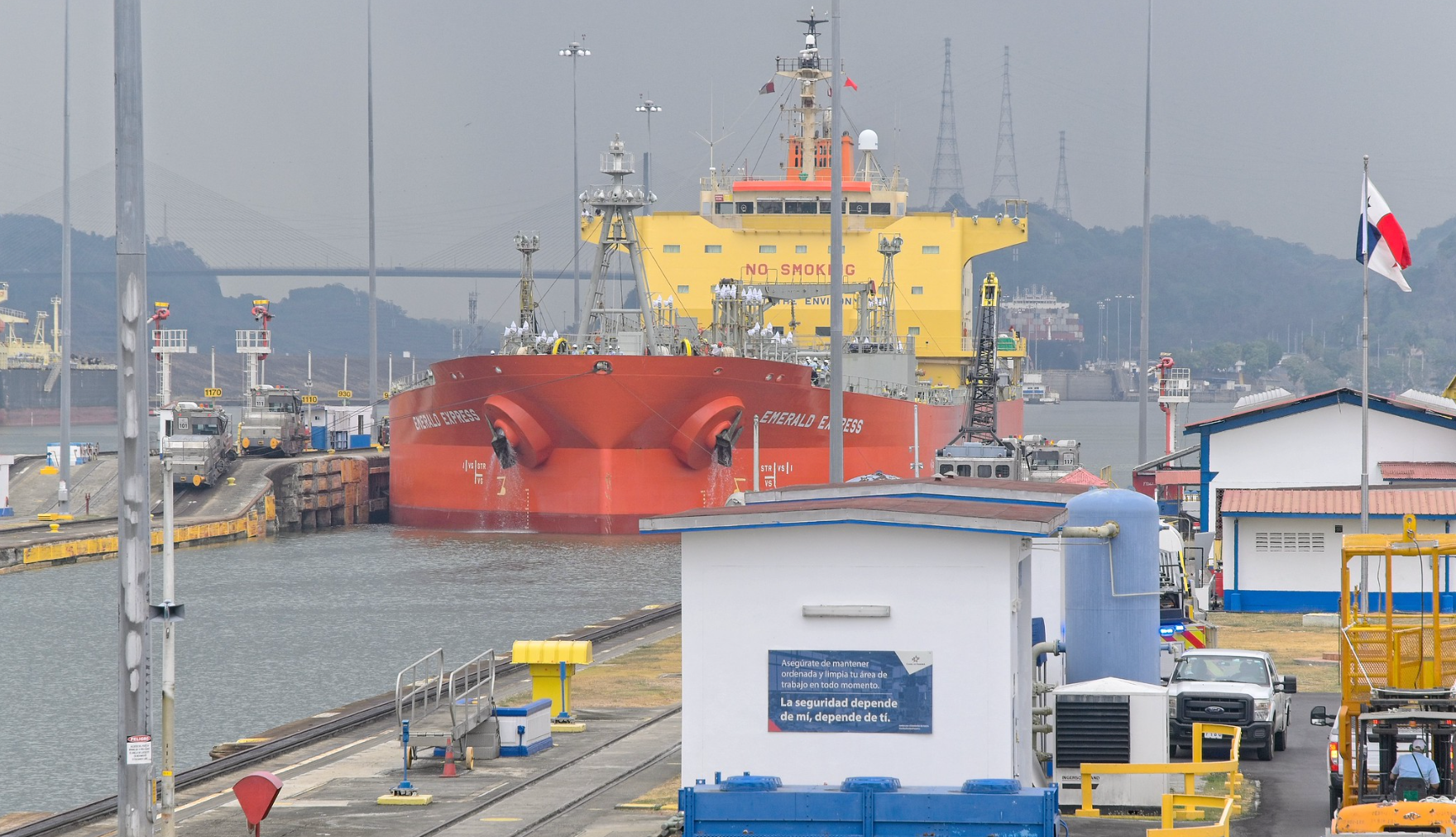
The departure of the Chinese port operator CK Hutchison Holdings from the Panama Canal represented a victory for the revamped Monroe Doctrine, reducing China’s ability to threaten the strategic waterway. At the same time, the failure by the United States to reward Panama, or at least defend it from Chinese retribution, sends the wrong message to other Latin American governments weighing whether to align with Washington against Beijing: that doing so invites punishment without protection or rewards.
Introduction
In January, Panama’s Supreme Court invalidated a contract held by Hong Kong company CK Hutchison Holdings Limited to operate ports on either side of the Panama Canal, following sustained pressure from President Donald Trump. The decision was a foreign policy win for the United States, where critics had warned for three decades about the dangers of China’s proximity to the strategic waterway—where 70% of cargo is either headed to or arriving from the U.S.
As China ruthlessly retaliates against Panama, Washington offers diplomatic cover, but little else by way of protection or compensation. This sends exactly the wrong signal to other Latin American countries that might consider allying with the U.S. in its global rivalry with China or, at the very least, excluding Beijing from the region’s most sensitive infrastructure. By contrast, should the U.S. take steps to protect Panama from China and reward its partnership through greater investment, Panama could meaningfully reap the benefits of taking sides in great power competition.
‘The Taking of Panama’
The U.S. cemented its influence in Panama after helping to secure the country’s independence in 1903. That same year, the two nations signed a treaty giving the U.S. control of a ten-mile-wide strip to dig the Panama Canal over the next ten years.
Not surprisingly, President Jimmy Carter’s 1977 agreement to hand over the Canal to Panama, which was officially transferred in 1999, sparked controversy in the U.S. Two decades later, Carter’s critics were once again agitated after Panama awarded a Hong Kong-based company, Hutchison Whampoa (now CK Hutchison), a 25-year contract to operate Canal ports. The decision raised “the important question of whether Communist China has gained a foothold in the Panama Canal,” said Jesse Helms, then Chairman of the Senate Foreign Relations Committee, in a hearing in 1998.
Helms’s criticism reflected persistent fears of China abusing its control of the Balboa and Cristóbal terminals, the Canal’s primary ports, to collect intelligence on shipping flows, identify global supply chain vulnerabilities, or, in a war against the United States, sabotage the Canal to prevent U.S. warships from moving between the Atlantic and Pacific theaters. More recent concerns have been raised that Chinese ports could serve as hubs for trafficking fentanyl and its chemical ingredients. Notably, there is limited evidence supporting these concerns, and the PANAMAX multinational military exercise, led by the U.S. Southern Command, is designed to address Canal vulnerabilities. Fears, however, have persisted.
While disruptions at the Panama Canal would hugely inconvenience China, Panama’s second-biggest customer, the impact would be far greater for the U.S. The “Big Ditch” allows U.S. shippers to easily move goods from coast to coast by skipping a grueling voyage around Cape Horn, and vastly shortens the trip from Asia to the eastern coast of the U.S.
‘Taking it Back’
In his second inaugural address, Trump revived concerns over the Canal’s vulnerabilities and threatened to seize the Canal, which has successfully been operated by the Panama Canal Authority for a quarter-century. The president’s remarks were imprecise and stunningly aggressive, setting off a diplomatic crisis.
Nevertheless, Trump received support from his domestic allies, with four senators introducing a resolution alleging that the port concession violated Panama’s obligation to preserve the Canal’s neutrality. A House bill sought to authorize the purchase of the Canal. In the meantime, U.S. officials demanded free Canal transits for U.S. Navy ships, which already enjoy front-of-the-line privileges under the 1977 treaty.
The whole debate was predictably counterproductive: it stoked anti-Americanism in Panama and kneecapped its recently elected leader, José Raúl Mulino, who had entered office eager to deepen ties with Washington. In pursuing the Canal, Trump targeted the primary symbol of Panamanian sovereignty, a source of national pride, and its principal economic engine. Last year, the Canal brought in $5.7 billion and transferred $3 billion to the treasury.
Should Trump forcibly capture the Canal, it would torpedo U.S.-Panama relations and reignite the protest movement that once threatened Canal operations and led Carter to negotiate the Canal turnover in the first place.
Exit China
Ultimately, Panama and the United States found an off-ramp from the standoff: exiling China from the ports while maintaining Panama’s ownership of the Canal. In May 2025, a consortium led by U.S. asset manager BlackRock announced plans to buy the ports from Hutchison for $19 billion. The deal angered the authorities in Beijing, and the Chinese government derailed the sale. Then, in January, Panama’s Supreme Court invalidated the Hutchison contracts under U.S. pressure, and Panama seized the ports.
The decision was arguably the most significant success for Trump’s pivot to Latin America—a strategy known as the “Donroe Doctrine” and marketed as an update to the 19th-century Monroe Doctrine that sought to minimize European meddling in the Americas. Trump’s National Security Strategy (NSS), released in November 2025, promised to “deny non-hemispheric competitors the ability to position forces or other threatening capabilities, or to own or control strategically vital assets, in our hemisphere.” In this case, the Panama Canal clearly met the definition of a “strategically vital asset,” and China was the quintessential “non-hemispheric competitor.”
By evicting China from the Canal ports, Trump achieved a longstanding national security objective without firing a shot. The U.S. strategy undoubtedly carried diplomatic and reputational costs, but unlike Trump’s territorial pursuits of Canada and Greenland, his pressure on Panama succeeded, addressed a genuine national security challenge, and restricted the further hemorrhaging of U.S. soft power to within Panama’s borders.
‘Heavy Price’
For Panama, however, there has been decidedly little to celebrate following its Supreme Court ruling invalidating the port contracts. China responded to Panama’s decision with fury. Panama’s population of 4.5 million would “pay a heavy price,” China warned. In the following days, Hutchison claimed the Panamanian government owed it $2 billion for the “illegal takeover” of its ports. Chinese authorities dressed down executives from global shipping behemoths for temporarily assuming management of the terminals, and China’s COSCO Shipping Corporation suspended operations at the Balboa terminal.
Anxious about losing its position in Central America and encouraging further U.S. intervention, Chinese maritime authorities are now harassing Panamanian-flagged vessels at Chinese ports and pressuring Chinese shipbuilders not to build ships to be registered in Panama. In all, China has reportedly detained almost 600 ships flagged in Panama. These measures could persuade Greek, Japanese, and Indian shippers to reconsider their reliance on the Panamanian maritime registry—a lucrative source of income and status for the small state—and register their ships elsewhere.
The U.S. has not entirely ignored Beijing’s intimidation of Panama. In March, America’s Federal Maritime Commission condemned China for its “retaliatory actions” against Panama. In April, Secretary of State Marco Rubio complained that China’s conduct “destabilizes supply chains.” Later, in a joint statement alongside Bolivia, Costa Rica, Guyana, Paraguay, and Trinidad and Tobago, the U.S. said Panama should be “free from any undue external pressure.”
Such statements, however, did little beyond antagonizing Beijing and deepening tensions between Panama and the world’s second-largest economy. “Who covets the Panama Canal?” a spokesman for China’s Foreign Ministry asked, adding that the United States is “the one who has politicized” the ports. Mulino now seems eager to de-escalate: Panama’s signature was notably missing from the joint statement issued in April. On May 26, Panama’s foreign minister met his Chinese counterpart in New York City, where the Chinese diplomat reportedly warned against “third-party interference” in China-Panama relations. Last month, a Chinese diplomat visiting Panama demanded that the government “correct its mistakes and protect the legitimate and lawful rights and interests of Chinese businesses.”
Friends Like These
In the State Department’s one-sided “America First” ledger, U.S. policy toward Panama still appears as a victory for coercive diplomacy. But Panama, along with other small states and middle powers in the region, is likely deriving a different takeaway. After all, in the six months since the Panamanian court ruling, China has pummeled Panama, and the U.S has not absorbed any of the blows.
This may lead other governments to think twice when Washington pressures for economic decoupling from China, diplomatic recognition of Taiwan, or other actions that would displease the Chinese leader, Xi Jinping. That includes Chile, where the Trump administration opposes a planned undersea fiber optic cable to Hong Kong, and Peru, where U.S. officials are pressing the authorities to seize a Chinese-built megaport.
Indeed, the United States is chronically absent when Beijing exerts pressure on Latin American governments. Under the Biden administration, for example, Costa Rica bowed to U.S. pressure and banned Huawei, the Chinese telecommunications juggernaut, from building the country’s 5G network. As China fought the ban in court and threatened retaliation, the U.S. did little to run interference or compensate Costa Rica by subsidizing Western high-speed hardware or strengthening cybersecurity.
A New Order
In Panama, there is still time for the United States to write a different ending to this story.
Rather than relying primarily on diplomatic pressure to reduce Chinese influence, Washington should compete by providing high-quality alternatives. Supporting Panama’s priority infrastructure projects can demonstrate that the U.S. is a reliable long-term development partner while reducing Panama’s dependencies on Chinese capital and construction firms.
Mulino is already undertaking three ambitious infrastructure projects: a 250-mile tourist train from the capital to the western city of David; a $1.6 billion reservoir to help the Canal address droughts that have become more frequent due to climate change; and an oil and gas pipeline across the isthmus. The U.S. government and U.S. companies should take the lead on these projects. The Army Corps of Engineers, for example, could provide free support for building the Río Indio dam, and the Millennium Challenge Corporation could help pay for the railroad. (The Corps is already assisting by conducting studies of the proposed dam.) Further involvement would end a losing streak that has seen Chinese firms tackle signature projects throughout Latin America, from the Demerara Harbor Bridge in Guyana and Bogotá metro in Colombia to the fourth bridge over the very same Panama Canal.
Given anxiety over China and the Canal, the U.S. could also invest in Panama’s capabilities in maritime security and cybersecurity. Canal security increasingly depends not only on physical control but also on protection of port management. U.S.-Panama cooperation should therefore include cybersecurity assistance, intelligence sharing, and protection of critical infrastructure. U.S. support could establish Panama as a leader in assessing and mitigating risks to global chokepoints, and as a driver of global cooperation and burden sharing for keeping open strategic shipping lanes. In the meantime, U.S. port authorities—and ideally, their counterparts in Europe—should show Chinese ships the same special attention Panama-flagged vessels are receiving in China. In a promising sign, on July 7, the chair of the U.S. Federal Maritime Commission urged China to discontinue its “retaliatory inspections” of Panama-flagged ships and threatened “remedial measures” against Chinese-controlled carriers at U.S. ports.
Conclusion
The return of the Monroe Doctrine has alienated Latin Americans. By the sixth month of Trump’s second term, favorable views of the United States had already fallen in the region’s three largest economies. The NSS says all countries should decide “whether they want to live in an American-led world.” As Latin American leaders pondered this question, the United States raised tariffs, sought the mass removal of Latin American migrants, taxed remittances, and threatened military action in Mexico, Colombia, and Cuba.
Even so, Panama has, for now, sided with the United States in the U.S.-China competition. Whether others follow its lead will depend in part on the costs and rewards of Panama’s decision. As China strikes at Panama’s prized maritime industries, the costs are becoming clear, but the rewards remain uncertain. Fortunately, the United States has the tools to buffer Panama from Chinese retribution and make economic investments that showcase the value of American friendship amid the intensifying U.S.-China battle for influence in the Western Hemisphere.
. . .
Benjamin N. Gedan, PhD, is a Senior Fellow and the Director of the Stimson Center Latin America program and an Adjunct Lecturer and Foreign Policy Fellow at the Johns Hopkins School of Advanced International Studies (SAIS). Previously, he served as the South America Director on the National Security Council Staff at the White House and held positions at the U.S. Department of State and U.S. Treasury Department. He has published in the Georgetown Journal of International Affairs, The SAIS Review of International Affairs, the Journal of Democracy, The New York Times, The Wall Street Journal, The Washington Post, The Miami Herald, and Foreign Policy.
Image Credit: Dave Massie, CC BY 2.0, via Flickr