
One Health in a Fractured World: Why Global Health Governance Must Adapt to Geopolitical Fragmentation
The COVID-19 pandemic exposed weaknesses in global health systems and underscored how interconnected drivers such as changes in land usage, urbanization, and climate amplify zoonotic disease threats. One Health, an integrated approach linking human, animal, and ecosystem health, has gained institutional traction via global governance approaches, yet faces persistent structural challenges, including siloed mandates, funding misalignment, and limited enforcement. We argue for pragmatic, polycentric governance—local leadership supported by regional mini-lateral coalitions and existing bi- and multilateral regimes—to operationalize One Health sustainably and equitably.
Introduction
In early 2020, the COVID-19 pandemic revealed the weaknesses of global health systems to infectious diseases. However, less recognized was how the emergence of this novel virus highlighted the global changes converging to heighten outbreak risks: increased human-animal contact and agricultural intensification, accelerated population growth and urbanization, and changing weather and climatic patterns. These dynamics are playing out repeatedly, from the devastation to the poultry industry—where migratory birds and marine mammals suffer from rampant H5N1 influenza—to surges in mosquito-borne virus infections like chikungunya and Oropouche across the Americas. While these examples demonstrate that health threats are increasingly transboundary, global governance mechanisms are at risk of fragmentation amid political instability and declining trust in multilateral institutions. This article argues that given current geopolitical fragmentation, One Health governance must evolve from idealistic coordination, toward pragmatic, resilient, and multi-level cooperation.
What is One Health?
The term “One Health” first emerged in the early 21st century due to growing scientific recognition that infectious diseases of wildlife and livestock could negatively impact humans, and vice versa. Since then, the most widely adopted definition is that of the One Health High Level Expert Panel:
“One Health is an integrated, unifying approach that aims to sustainably balance and optimize the health of people, animals, and ecosystems.”
Early origins of One Health focused on operational collaboration to contain specific infectious disease outbreaks. Yet, the field has grown considerably, benefitting from formalized, interdisciplinary frameworks and governance systems. The most prominent of these is the Quadripartite, established in 2010 between the World Health Organization (WHO), the Food and Agriculture Organization of the United Nations (FAO), and the World Organization for Animal Health (WOAH; formerly OIE), and subsequently joined by the United Nations Environment Programme (UNEP) in 2022. The Quadripartite led the development of the One Health Joint Plan of Action (2022-2026) (OHJPA), providing a blueprint for how these organizations would coordinate to sustainably advance One Health collaboration and implementation, prevent pandemics, and contribute to enhancing resilient health systems.
Since its inception, the Quadripartite has successfully raised the profile of One Health, earning commitments from the G7, G20 and numerous individual countries to adopt the approach in addressing global health threats, particularly for pandemic preparedness and response. The establishment of the One Health High-Level Expert Panel brought geographically and culturally diverse interdisciplinary expertise to the Quadripartite, facilitating better navigation of policy processes and anticipation of implementation barriers. Workshops in different WHO regions further advocated for adoption of One Health strategies, enhanced regional and national coordination, and resulted in the creation of country roadmaps. Yet ultimately, such efforts are limited by the resources of the Quadripartite and critically rely on national ownership, financing mechanisms, and momentum to move from strategy to operationalization.
Intrinsic Challenges with One Health Governance
The effort to coordinate sectors with responsibilities in One Health policy and implementation may appear straightforward in theory, but faces persistent structural problems as well as legal and normative weaknesses in practice.
While broad support for One Health exists across the various sectors involved, they often operate with different mandates, budgets, and data systems, making coordination difficult or ad hoc rather than automatic. Though these operational difficulties are being addressed in some settings through multisectoral national and regional strategies, integration is unlikely to ever be fully equitable. One Health has traditionally been promoted with a human health focus by the Global North, marginalizing local and Indigenous knowledge of the cultural and environmental drivers of emergence. This imbalance is mirrored in funding: expecting the environment, veterinary, and agriculture sectors to contribute personnel, knowledge, and consumables to a human health-centric preparedness and response cycle—without acknowledging fundamental discrepancies in resources and mandates—will not resolve the problem.
Government funding is also often reactive—focused on crisis response—whereas One Health approaches to epidemic preparedness depend on sustained investment in prevention. It promotes monitoring ecosystems, conducting surveillance across animal reservoirs, and detecting early spillover. While One Health encompasses far more than just infectious diseases, this remains its most widely applied use case and the one that has gained the most political traction to date. As such, it has become difficult to advocate for One Health multisectoral funding without a looming global health security threat, resulting in trade-offs between sectors.
Finally, One Health as a global initiative lacks a central governing body with real power. While WHO, WOAH, UNEP, and FAO collaborate via the Quadripartite, no one organization can enforce policy across sectors or countries. Similarly, although OHJPA provides a comprehensive framework for advancing One Health and offers technical assistance to support national implementation targets, its initiatives are non-binding and completely voluntary.
The Added Negative Impact of Global Fragmentation
Global fragmentation is increasingly undermining One Health governance. The shift away from Pax Americana and a US-led world order towards a multipolar system has eroded trust in multilateral institutions, including those of the Quadripartite. The WHO has been most dramatically affected, with the US withdrawal prompting a comprehensive review of its core functions and strategic streamlining in response to new fiscal constraints. There have been knock-on effects across other global bodies: the US presidency of the Group of Twenty (G20) in 2026 has refocused its efforts towards economic growth and prosperity, moving away from prior high-level priorities—such as the Sustainable Development Goals (South Africa) and renewable energy (Brazil)—that were more closely aligned with One Health objectives.
This geopolitical fragmentation has been shaped by the prioritization of national interests, the politicization of global health, and international conflicts. Vaccine nationalism during COVID-19, whereby high-income countries disproportionately over-purchased limited supplies of life-saving vaccines, hampered efforts of multilateral initiatives to provide vaccines to countries unable to afford them directly from pharmaceutical companies, further demonstrating the limitations of global cooperation when it is most needed. The politicization of the origins of the pandemic not only directly influenced the US decision to withdraw from the WHO, but also cast a pall over scientific efforts related to zoonotic diseases. Global health and foreign assistance budgets are easy targets in this period of fragmentation when defense budgets are on the rise, as was the case when NATO members agreed to increase their defense spending to support Ukraine. While defense stakeholders increasingly recognize the value of a One Health approach, their integration into One Health governance needs careful consideration.
Rethinking One Health Governance: From Idealism to Pragmatism
Moving from idealism to pragmatism requires confronting structural, political, and operational realities. One Health, at its core, is aspirational, requiring efficient collaboration, shared priorities, and sustained funding across a variety of sectors. The stark reality is that international governance systems are, as aforementioned, fragmented and unlikely to be sufficient; a polycentric model provides an alternative approach. Referred to as polycentric governance, this model involves systems in which authority is distributed across levels rather than centralized. Each center operates semi-independently, interacting through cooperation, competition, and coordination, while adapting to local contexts and contributing to broader system goals.
For One Health, centers of authority span communities, governments, and international organizations. The approach emphasizes local actors taking the lead, with higher levels providing support and coordination, leveraging existing and functional structures rather than creating new ones. Local communities are on the front lines of spillover—they are often the first to observe emerging risks but may lack the necessary resources to report these events or respond effectively. Governments are the seat of policy and regulation, housing national surveillance systems and allocating budgets for preparedness and response, but, as noted earlier, lack of coordination and siloed reporting systems prevent effective response. Thus, intergovernmental organizations such as the African Union or the Association of Southeast Asian Nations (ASEAN) can come into play and facilitate coordination between borders. For example, the African Union has a One Health Data Alliance Africa Project, which seeks to “enhance digitalized One Health governance” across the continent. As such, polycentric governance does not replace centralized authority, rather it complements it through a “system of systems.”
One Health events often require decisive action at local or regional levels without waiting for global alignment. Mini-lateral cooperation—small coalitions of middle-powered willing states—help narrow the focus on polycentric governance. It can translate One Health from broad visions into tangible outcomes. Cooperation like this can prove to be quite effective, as One Health challenges are typically geographically and ecologically focused, making global agreements inefficient. Mini-lateral groups are politically aligned sufficiently to cooperate effectively and capable of acting quickly on a shared problem, focusing on specific outcomes rather than broad mandates. One Health mini-lateralism can therefore leverage a variety of platforms including regional networks that share cross-border surveillance data, functional coalitions established for specific technical issues like vaccine research and development, antimicrobial resistance monitoring or climate-health data sharing, or public-private partnerships linking policy to operational action. One example is the newly launched WOAH-PREZODE Working Group, which is convening experts across diverse One Health fields to bridge gaps between scientific evidence and policy formulation. While not automatically resolving the structural challenges highlighted above, such efforts provide stronger opportunities to set shared objectives that rebalance sectoral inequities and prioritize local knowledge while supporting regional priorities.
When pursuing intergovernmental cooperation on One Health—be it at the mini-lateral or multilateral level) —rather than creating new frameworks or initiating new agreements, a more effective strategy may be to mainstream One Health into existing regimes that have authority, financing, and compliance mechanisms, notably climate, trade, and pandemic governance. The goal, then, is to incorporate human–animal–ecosystems linkages where decisions are already being made. Climate agreements and trade frameworks provide clear future opportunities to integrate One Health principles. However, lessons from the 2025 Pandemic Treaty should be taken to heart: while One Health was formally recognized in the Treaty as central to pandemic preparedness, important points related to implementation and funding, especially for lower- and middle-income countries, were pushed to subsequent deliberations and left unanswered.
Finally, these examples underscore the importance of aligning incentives for One Health, both between participating sectors and across levels of polycentric governance. As major powers pivot to bilateral approaches to foreign assistance and health funding, countries must react by identifying areas of convergence with One Health structures and programs. Mini-lateral coalitions can expand through inclusion of emerging economies—providing opportunities to center new voices and advance equity—as well as through the engagement of non-governmental actors: philanthropic entities, industry, and civil society organizations can all play important roles and, in turn, benefit from greater One Health integration.
Conclusion
Experts suggest that there is approximately a 50/50 chance of another deadly pandemic before 2050, and the likelihood is that it will be zoonotic in origin. While the benefits of One Health encompass far more than infectious diseases, the reality is that pandemic preparedness offers a critical incentive for the levels of political and operational commitment needed for establishing sustainable and effective One Health governance. Though some may argue that geopolitical fragmentation makes cooperation needed for a global One Health approach unrealistic, we suggest that flexible, networked governance can replace, and even outperform, simplistic visions of top-down oversight. Global change is accelerating biological and environmental risks faster than our current systems can respond: One Health is the only framework designed to manage these interconnected threats. With appropriate and effective governance to guide implementation, it can provide practical, risk-reducing strategies to strengthen ecosystem health, support productive economies, and bolster national and regional security.
. . .
Dr. Claire J. Standley is a Senior Biosecurity and Biosecurity Initiatives Lead at the Coalition for Epidemic Preparedness Innovations (CEPI), as well as an Adjunct Associate Professor with the Center for Global Health Science and Security at Georgetown University. Her academic research focuses on One Health and multisectoral approaches to health systems strengthening for infectious disease prevention and control. She has previously held academic roles at the George Washington University and Princeton University, and also served as a AAAS Science & Technology Policy Fellow at the U.S. Department of State. She is an expert for the WOAH-PREZODE One Health Science-Policy Dialogue Working Group.
Dr. Erin M. Sorrell is a Senior Scholar at the Johns Hopkins Center for Health Security and an Associate Professor in the Department of Environmental Health and Engineering at Johns Hopkins Bloomberg School of Public Health. She also serves as Director of the Elizabeth R. Griffin Program at the Center for Health Security. Her research portfolio combines the disciplines of basic science, biosafety, and one health systems strengthening to develop and validate methodologies to map, assess, and address both the structure and function of one health systems. She has held academic roles at Georgetown University, the George Washington University and Erasmus Medical Center, and has served as an AAAS Science & Technology Policy Fellow at the U.S. Department of State. She is an expert for the WOAH-PREZODE One Health Science-Policy Dialogue Working Group.
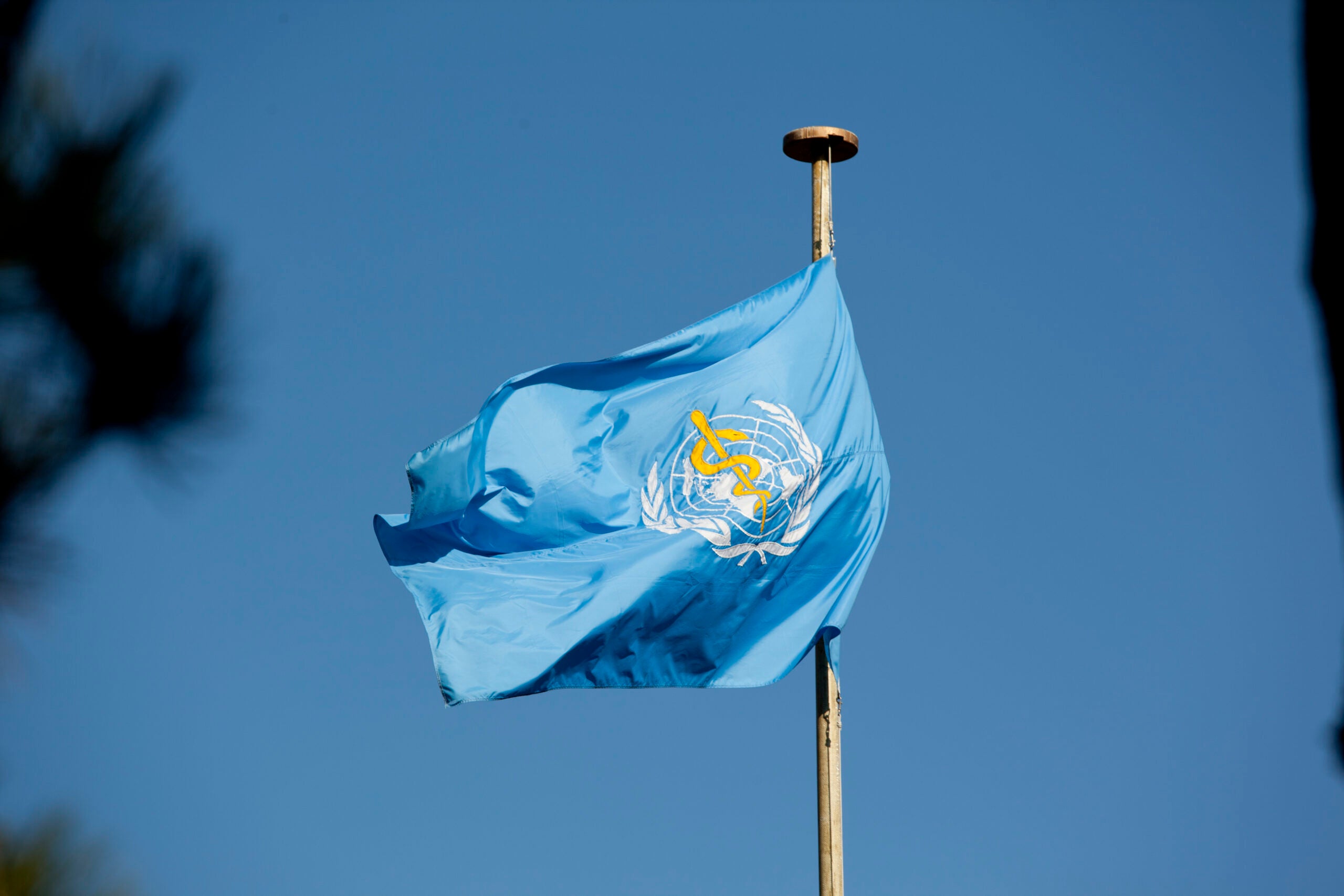
Image Credit: Eric Bridiers, CC BY-SA 4.0, via Flickr