
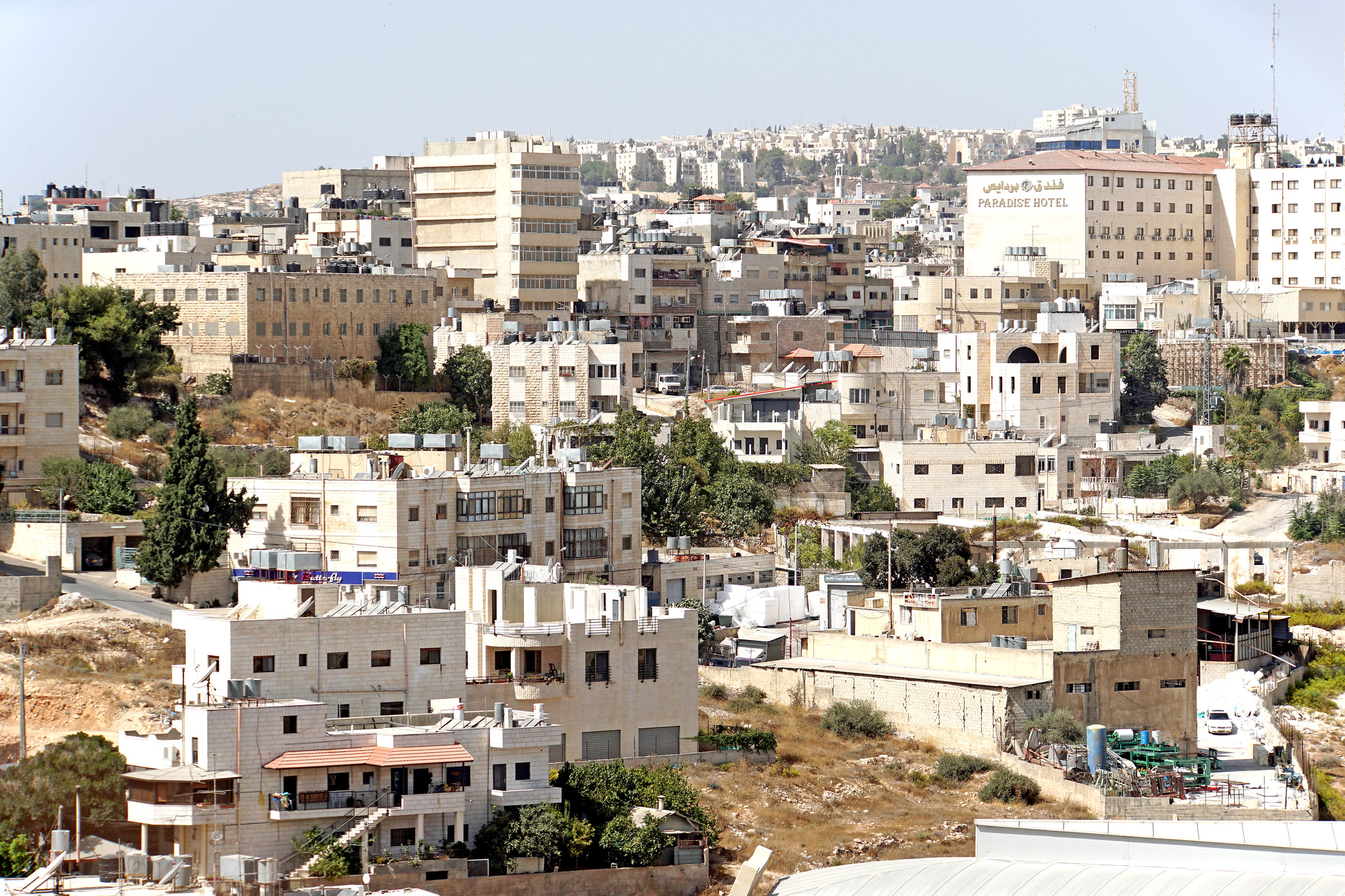
The Future of Jordan Amidst the Palestinian Crisis
This article explores how the Palestinian crisis and the death of the two-state solution endangers the Hashemite Kingdom of Jordan. It illuminates the complicated relationship between Jordan, Israel, and Palestine while highlighting why Israeli annexation of the West Bank poses an existential threat to this Arab state.
The Hashemite Kingdom of Jordan has been stalked by challenges since its invention through British colonialism a century ago. Bereft of oil and water, its languishing economy suffers from youth unemployment exceeding 40 percent. The ruling monarchy, descended from the Prophet Muhammad, regularly faces popular criticism over inequality and corruption. Jordan’s zigzagging borders abut Israel, Palestine, Syria, Iraq, and Saudi Arabia—a “crossroads of catastrophe” that has periodically brought refugees, terrorism, and war.
Despite this gauntlet, the Jordanian state has never buckled under violence or revolution. Such resilience has long fascinated Western observers, who, despite warning that Jordan teeters “on the edge” of collapse with every crisis, prefer to imagine the country as a veritable “oasis of calm” in the Arab world.
All of this may soon change. An existential threat now hangs over the Kingdom. The death of the two-state solution paves the way for Israeli annexation of the West Bank, which would expel millions of new Palestinian refugees onto Jordan, thereby potentially destroying it. Without Jordan’s Western allies standing against Israeli incursion into the West Bank, Jordan faces the once-thinkable threat of state collapse.
The Israeli-Palestinian Yoke
For generations, three survival strategies have underlaid Jordan’s political order: tribal loyalty, Western support, and domestic reforms. During its colonial days as the Emirate of Transjordan (1921-1946), the nascent monarchy mobilized local tribal communities—often termed Transjordanians or East Bankers—to serve in its army and political organs, thereby facilitating the monarchy’s control over society. Buttressing this coercive apparatus has been Western support. Seeing Jordan as a pro-Western buffer state, the United States has delivered some billion in economic and security aid to Amman since the late 1950s, aligning Jordanian foreign policy with American interests. Finally, Hashemite kings have defused popular unrest with promises of democratic and economic reforms, keeping public grievances moderate and peaceful even if such pledges seldom came to fruition.
These mechanisms safeguarded national stability on numerous occasions, such as the leftist-nationalist uprisings of the 1950s, the economic collapse of the 1980s, and the 2011-12 Arab Spring. Jordan’s regime sidestepped each of these crises by mollifying political opposition, promising democracy and prosperity, and leaning upon the West for aid and arms. After the April 2021 coup-mongering controversy involving Prince Hamzah, the government launched political modernization and economic reform schemes to retrench public support. Yet such strategies of managing domestic stability have never resolved the vexing dilemma of Palestine.
Jordan’s domestic stability has long been intertwined with Israel and Palestine. During the colonial era, then-ruler Emir Abdullah and local tribal leaders engaged both Palestinian and Zionist leaders in the British Mandate for Palestine. Jordan annexed the West Bank and East Jerusalem after the 1948 Arab-Israeli War, but the country lost both in the 1967 conflict. These wars generated a large influx of Palestinian refugees into the East Bank, most of whom became Jordanian citizens, while West Bank Palestinians under Jordanian governance also gained citizenship. This wave of migration turned Jordan’s rural tribal society into an urban Palestinian-majority one. The Hashemite crown also gained custodianship—which it still exercises—over the holy Islamic sites of Jerusalem.
After the 1948 Arab-Israeli War, Jordan abided by the pan-Arab consensus to end Israel’s occupation of Palestine. King Hussein, who ruled from 1953 to 1999, also framed himself as a guardian of the Palestinian cause. This ownership put him at odds with the Palestine Liberation Organization (PLO), given its proclaimed status as the sole legitimate representative of all Palestinians—including those living in Jordan. Consequently, in 1970, Jordan’s tribal-staffed military bloodily won a short civil conflict after PLO guerrillas attempted to depose King Hussein.
Such fighting spawned anti-Palestinian attitudes among some Transjordanians. East Bank chauvinists flaunted tribal values as the basis of Jordan’s national identity, regarding Palestinian-Jordanians—who comprised the urban middle-class—as untrustworthy guests. Palestinian-Jordanians suffered discriminatory exclusion from state-related work, from the military to the government, making many feel like second-class citizens. Since the 1970s, decades of socialization and intermarriage have softened this ethnocratic division. Still, delicate questions of identity, including who truly counts as Jordanian, haunt the unspoken rules of politics.
The False Flag of Peace
The possibility of Palestinian statehood served as a safety valve for these fractious pressures from the 1970s onward. Many Transjordanian voices believed a future Palestinian state centered upon the West Bank and Gaza would encourage Palestinian-Jordanians to leave. Palestinian-Jordanians—many of whom would prefer to stay, given their social roots in the Kingdom—supported an independent Palestine on the grounds of the rights of all people to self-determination.
While the Hashemite monarchy attempted to strike a delicate equipoise, advocating for Palestinian rights while maintaining West Bank administrative ties in hopes of regaining the territory, this position gradually changed. King Hussein embraced the 1974 Arab League resolution reaffirming the PLO as the sole legitimate representative of the Palestinian people and severed Jordan’s legal claims over the West Bank in 1988. Consequently, the Jordanian government inked a peace treaty with Israel in 1994, which the United States rewarded with renewed foreign aid. Bookending that accord were the 1993 and 1995 Oslo Accords, which promised of a two-state solution and the establishment of the Palestinian Authority. These peacemaking deals with the PLO and Israel recast Jordan’s position within the Israeli-Palestinian conflict. Now, the state could advance Palestinian statehood—still a safety valve—as a trustworthy mediator between Israel and the Palestinian Authority (PA).
From the 2000s, however, this two-state negotiation approach withered due to Israeli intransigence, Hamas’ spoiler tactics, the PA’s enfeeblement, and recurrent violence. Israel shrugged off Jordanian complaints about illegal West Bank settlements and encroachments upon Jerusalem’s Al-Aqsa compound, revealing Jordan’s junior status in this bilateral relationship. Pragmatic entreaties, such as the 2016 Jordanian agreement to buy Israeli natural gas, did not give Amman any leverage. Nor could Jordan prevent the 2020 Abraham Accords, despite the agreement weakening the PA. With each challenge, Jordan saw its position marginalized.
The Gaza War brought new domestic perils. During 2023-24, anti-Israel protests saturated the Jordanian public. Though the government criticized Israel and promoted humanitarian relief, including aid airdrops into Gaza, citizens demanded more. Indeed, hardline calls to boycott Israel and end the 1994 peace treaty helped the Muslim Brotherhood’s political wing, the Islamic Action Front (IAF), emerge victorious in the September 2024 parliamentary elections. This victory alarmed officials, who had long sought to limit Islamist influence in politics.
These domestic pressures ratcheted upwards as Gaza’s death toll mounted and Israeli war-making expanded to Lebanon, Yemen, Syria, and Iran. This expansion put the Jordanian state into a quandary immune to its usual survival tactics of tribal loyalty, Western support, and domestic reforms. Transjordanians who mostly staffed the government, security forces, and military remain allegiant to the crown. But this has not stopped other tribal Jordanians from marching in unison with Palestinian-Jordanians against the gruesome devastation levied upon Gaza. Moreover, given its reliance upon Western support, Jordan cannot terminate its peace accord with Israel: ending the treaty would bring harsh US punishment, including withholding economic and military aid. Likewise, no domestic reform strategy has blunted public outrage. Promises of democracy and economic modernization stir little enthusiasm today, with King Abdullah and other royal officials conceding that domestic reforms take a backseat to foreign policy.
The Annexation Endgame
Thus, Jordanian authorities addressed popular unrest during the Gaza War with the only tool left: repression. Officials suppressed many pro-Palestinian marches and popular movements, particularly when activists criticized the government for its inability to halt the Gaza slaughter. In April 2025, officials banned the Muslim Brotherhood in what some decried as a political crackdown. However, this coercive approach is unsustainable, as it could stoke a bigger groundswell of protests, conjuring memories of the turbulent Arab Spring.
Nor does repression assuage deeper anxieties about the demise of Palestinian statehood. The United Nations-backed peace plan for Gaza, for which Jordan will not contribute peacekeeping troops, may portend less war. But it has also emboldened Israel’s efforts to annex the West Bank by dramatically expanding its settlement activities. Jordan now confronts a geopolitical apocalypse, for Israel’s large-scale land grabs and military reoccupation would expel millions more Palestinians onto the kingdom.
Such ethnic cleansing reifies a once-fringe delusion by right-wing Israeli voices that has now become mainstream—that Jordan should serve as an “alternative homeland” for Palestinians and that Jordan is Palestine. Even the Knesset has voted in favor of this extremist vision. Indeed, some proponents briefly insisted during the Gaza War that since Jordan already had a Palestinian majority, Gazan Palestinians themselves should relocate to the kingdom. A post-Netanyahu government in Israel would also advance this scenario, given that an overwhelming majority of its Jewish public supports expanding Israeli sovereignty over the West Bank.
This alternative homeland option, however, crosses the deepest red lines for Jordan. It would embody the gutting triumph of Israeli militarism over international law and Palestinian rights. For King Abdullah, it signals the demotion of Jordan from a key Western ally to a giant refugee camp, and questions whether the monarchy should even hold power in a de facto Palestinian state. This forced population transfer would also make Transjordanians an even smaller demographic minority, reigniting ugly social conflict around identity politics. It would further traumatize Palestinian-Jordanians. Accommodating millions of new Palestinian refugees would create economic catastrophe, given that a quarter of the populace already lives below the poverty line. Indeed, absorbing a half-million Syrian refugees during the Syrian Civil War nearly broke the economy.
King Abdullah thus echoes Jordanian society in his tenacious opposition to West Bank annexation, evoking a public mantra of the “Three No’s.” There can be no alternative homeland option, no displacement of Palestinians, and no foreclosure of Palestinian statehood. Tensions are running high in Amman, with prominent politicians recently declaring that Israeli annexation of the West Bank would be tantamount to declaring war. Further accentuating this martial posture, the Jordanian military is reactivating national conscription in 2026 after three decades, which some local commentators interpret as a sign that the government is preparing for “all potential scenarios” with Israel, including armed confrontation.
Escaping Doomsday
Israel’s expansion into the West Bank could destroy Jordan. The Kingdom’s fate now rests in the hands of the United States, which, as Israel’s staunchest patron, is the only external actor with the credibility to deter it from this devastating option. Israel would likely not actualize this move without overt American support.
For Jordan to escape doomsday, the United States must therefore decisively reject the alternative homeland scenario in its diplomatic messaging. It has wavered on this issue before: Presidents Biden and Trump, for instance, differed on the legality of Israeli settlements in the West Bank. Thus far, however, the Trump administration appears uncomfortable with full-fledged annexation. President Trump announced his resistance to the idea in September 2025, and Vice-President JD Vance and Secretary of State Marco Rubio criticized the Knesset vote in favor of annexation the following month. Saudi Arabia, Qatar, and the United Arab Emirates have also made clear they oppose Israeli expansion, and their assent remains crucial to implement the Gaza peace plan and finance the battered territory’s reconstruction.
Moving forward, the Trump administration must continue to consistently broadcast this anti-annexation position. The alternative homeland scenario will wreck one of the United States’ longstanding Arab allies in Jordan and sow further regional conflict.
…
Sean Yom is Associate Professor of Political Science at Temple University and Non-Resident Senior Fellow at Democracy in the Arab World Now (DAWN). His research explores issues of authoritarian governance, economic development, and US foreign policy in the Middle East. He is author of Jordan: Politics in an Accidental Crucible (Oxford University Press, 2025).
Image Credit: Dennis Jarvis, CC BY-NC-ND 2.0, via Flickr