Introduction
Air transport is a fundamental catalyst of Africa’s development trajectory. Airlines, airport operators, airport retailers, air navigation service providers, and civil aircraft manufacturers directly contribute 12 billion dollars, equivalent to 0.35 percent of Africa’s total gross domestic product (GDP). Using 2023 as a baseline, the African Union Commission (AUC) projects that passenger demand will triple and air traffic will double by 2050, placing significant strains on service and infrastructure providers. Each job in the aviation sector currently supports an additional 22 jobs across other African industries. In 2023, the sector employed 360,000 people, with 90 percent of them employed by airlines or airports. This number is projected to grow by 4.4 percent annually, reaching 840,000 by 2043.
Yet Africa’s connectivity challenge persists. The COVID-19 pandemic revealed how gaps in infrastructure connectivity perpetuate socioeconomic inequalities in underserved African markets. In Kenya, outlying regions such as Turkana, Wajir, and Lamu were effectively cut off from emergency medical services and supply chains due to limited air connectivity. Fully liberalizing air transport services could help bridge this divide, thereby expanding access to education, healthcare, and economic opportunities. These opportunities could be established through multi-stop regional routes, such as a Kisumu–Eldoret–Lodwar service, which would help improve access to specialized health and educational services concentrated in urban centers.
Therefore, Africa’s geography amplifies the developmental value of aviation. Limited road density, low rail penetration, and long distances between major cities mean air transport is essential to consolidate the continent’s markets. During COVID-19, increased cargo movements into northern Kenya demonstrated aviation’s direct role in expanding equitable access to economic and social opportunities. As such, air service liberalization improves connectivity by removing constraints on capacity, pricing, route entry, and cooperation between airlines. Stronger networks support Africa’s ambitions under the African Continental Free Trade Area (AfCFTA), from opening commercial opportunities to strengthening regional tourism, travel, and innovation ecosystems. However, overlapping liberalization policies also create regulatory burdens, restrict competition, and shield national carriers. A critical question remains: what limits Africa’s push for open skies?
Africa’s Air Service Liberalization Policy Journey
Open-sky agreements allow airlines from participating nations to operate any route between them without restrictions on capacity, frequency, or pricing. They also permit fifth freedom services, enabling airlines to carry passengers or cargo between two foreign countries as part of a flight originating or terminating in their home country. The United States and some European countries—Ireland, Spain, and Poland—have pursued deregulation since the late 1970s. At the same time, African governments also pursued open-sky agreements at bilateral, regional, plurilateral, and multilateral levels to overcome the limits of traditional regulatory frameworks. Today, many regions still rely on complex bilateral air service agreements (BASAs). In practice, these restrictive agreements can raise prices, reduce competition, and increase overall sector costs. Liberalization exposes air transport to market competition by removing regulatory controls over pricing and market entry, which improves service quality. A current example is the South African government’s interference in the national carrier’s ownership, rescue, and privatization processes, including commercial decisions on routes, capacity, and pricing.
Africa’s liberalization efforts have evolved through several frameworks. The 2019 African Continental Free Trade Area (AfCFTA) agreement strengthened links between air connectivity and commerce. Building on engagements since 2012, AfCFTA aims to eliminate trade barriers and boost value-added production across all sectors of the African economy. It seeks to unify the fifty-five African countries and eight Regional Economic Communities (RECs) into a single continental market, thereby supporting industrialization, enabling investment, and creating jobs.
The 2000 Yamoussoukro Decision (YD) laid the groundwork for the African Civil Aviation Commission’s (AFCAC) oversight role of the YD’s implementation under the AUC. The YD sought to eliminate restrictions on market access, frequency, capacity, and tariffs for intra-African air services. Although the AFCAC was tasked with overseeing successful implementation, the decision lacked strong enforcement mechanisms. Of the 54 African states, only 44 signed the YD and two joined through Regional Economic Communities (RECs), yet most have yet to fully implement the YD.
To revive momentum, the African Union launched SAATM in 2018 as the operational mechanism of the YD and a complement to the upcoming AfCFTA. SAATM aims to harmonize regulations, safety standards, competition rules, consumer protection, and dispute-settlement mechanisms under AFCAC oversight. It extends first through fifth freedom air traffic rights, enabling flexible routes, stopovers, and connections. The policy also liberalizes tariffs, flight frequency, and capacity to reduce regulatory constraints on fares, flight numbers, and volumes for passenger and cargo air services. SAATM seeks to eliminate the need for BASAs by promoting multilateralism, enhancing safety oversight, and encouraging cooperation through airline mergers and partnerships. However, commitment has not always translated into implementation.
The AfCFTA–SAATM relationship is mutually reinforcing: AfCFTA opens markets, while SAATM ensures that people, firms, and goods can move efficiently within them. Without liberalized air services, AfCFTA risks becoming a trade agreement constrained by inadequate mobility infrastructure. Currently, 37 countries, including Egypt, Rwanda, and South Africa, have committed to SAATM. For SAATM to succeed, member states must fully liberalize their BASAs in accordance with the YD by eliminating restrictions on frequencies, fares, and capacity.
Which policy interventions are needed?
The economic case for liberalization is strong. Globally, traffic growth rises by roughly ten percent following liberalization. In Africa, liberalizing Nigeria’s air transport could raise passenger traffic by 65 percent, while Tanzania recorded a nearly 17 percent growth in intra-African traffic after easing restrictions. Broader implementation of the YD and SAATM could increase intra-African traffic by 51 to 141 percent and reduce fares by up to 35 percent. Continent-wide studies suggest that a single-unit increase in the level of air liberalization is associated with a 0.91 percent increase in a country’s air transport connectivity.
Political-economy barriers remain significant. Many governments view national carriers as strategic assets and shield them from competition even when they are financially distressed. Liberalization remains constrained by this preferential treatment of state-owned airlines and airports, limited market access for private and foreign carriers, and restrictive BASAs. Ownership rules under BASAs restrict foreign investments, preventing consolidation and necessary capital mobilization. The fragility of bilateral agreements is illustrated by cases such as Tanzania’s suspension of Kenya Airways’ passenger flights over cargo rights disagreements.
Advancing liberalization requires structural reforms and political alignment. Regional blocs within established RECs, such as the East African Community (EAC), could serve as practical sandboxes for multilateral liberalization. The SAATM Pilot Implementation Program offers a low-risk mechanism for willing states to deepen access while demonstrating tangible benefits. Sequenced liberalization—following Europe’s example of progressively introducing traffic rights and aligning institutional reforms—can mitigate risks and build capacity. Public-private partnerships and targeted industry reforms, including strategic investments, cross-border joint ventures, and infrastructure modernization, could strengthen African carriers. Incentive-driven mechanisms such as regulatory support, concessional finance, and route development subsidies can help align national interests with broader continental goals. Experiences from Europe underscore the need for institution-led liberalization backed by enforcement frameworks. Africa’s political economy demands adaptive, negotiated approaches that recognize diverse national aviation systems while pushing toward continental coherence.
Conclusion
Unlocking Africa’s aviation potential through SAATM requires a coordinated, multi-dimensional strategy. Strong political will is essential, as only governments can unlock restrictive BASAs, harmonize safety and competition rules, and create enabling environments for airlines to thrive. Adhering to global safety benchmarks will boost confidence, while modernizing fleets and upgrading airports and navigation systems will enhance efficiency and capacity.
Aligning policies on visa openness, infrastructure development, and airline participation in liberalization efforts is key. Rwanda’s visa-on-arrival policy and open-sky agreements have attracted carriers and made its capital, Kigali, a transit hub for East and Central Africa. Ethiopia’s investments in airport infrastructure and its national carrier have similarly strengthened intra-African connectivity. On land, the Northern Corridor linking the Port of Mombasa with Uganda, Rwanda, and the eastern Democratic Republic of the Congo (DRC) has reduced transit times from over two weeks to less than one. The Maputo Development Corridor spurred over five billion dollars in private investment and revitalized cross-border mobility. The Abidjan–Lagos Highway is expected to increase trade in the Economic Community of West African States (ECOWAS) by 23 percent. SAATM offers aviation’s equivalent: faster, farther-reaching connectivity that unites markets, widens opportunity, and deepens people-to-people exchange. With coordinated action, institutional strengthening, and sustained political commitment, Africa can unlock a new era of seamless travel, cultural exchange, and sustainable growth, thereby transforming its airspace into a powerful engine of continental integration.
. . .
Dr. Simon Peter Njoroge is the General Manager of Operations and Safety at the Kenya Airports Authority. He plays a pivotal role in ensuring the safety and security of passenger and cargo operations in Kenya’s national airport system infrastructure. With a keen interest in addressing the challenges of developing African aviation, Dr. Njoroge has also published works focusing on air transport liberalization in Africa.
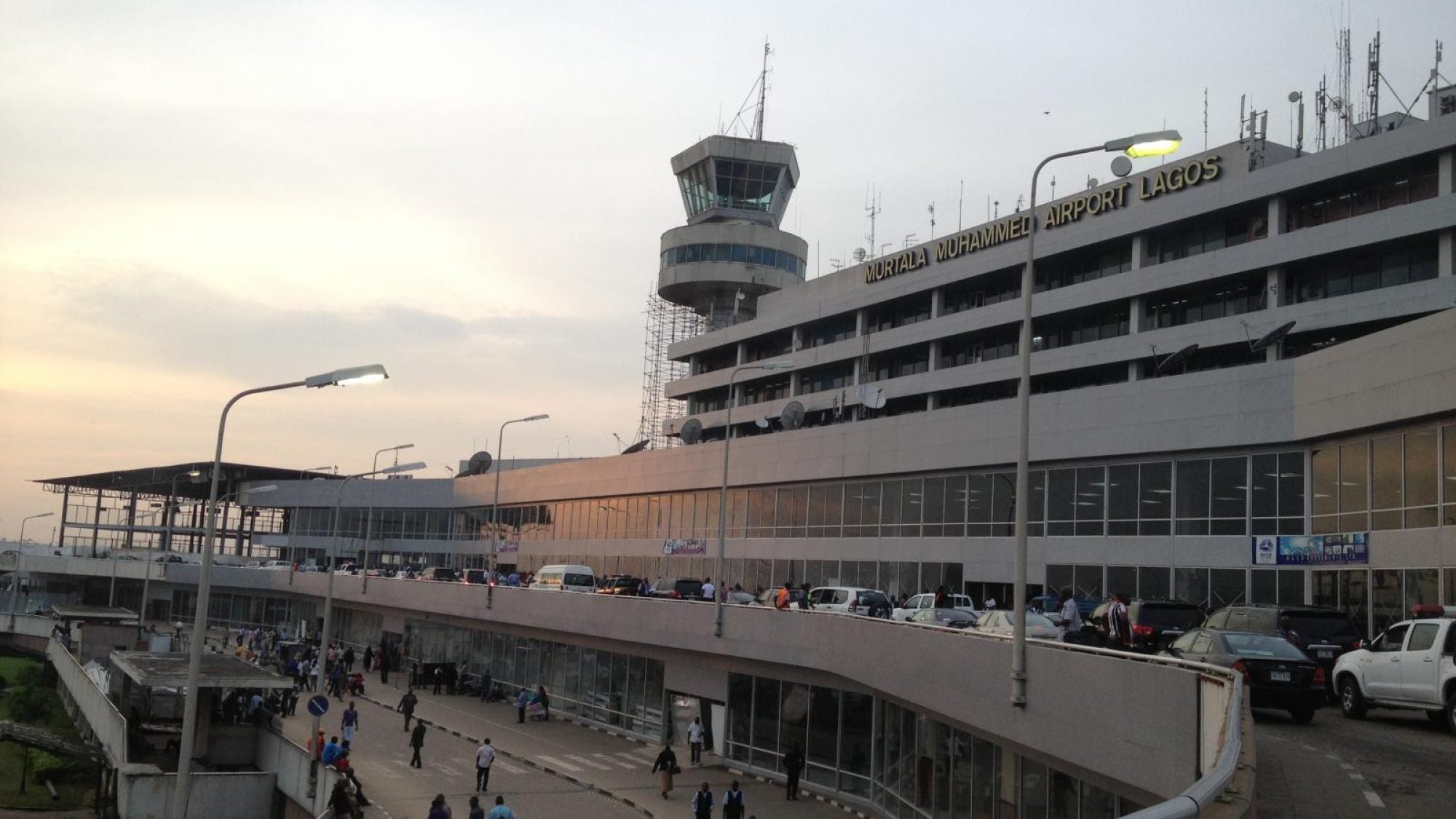
Image Credit: Lagos Airport by afromusing, CC BY-SA 2.0, via Wikimedia Commons