
A New Way Forward – The Transatlantic Subnational Resilience Framework
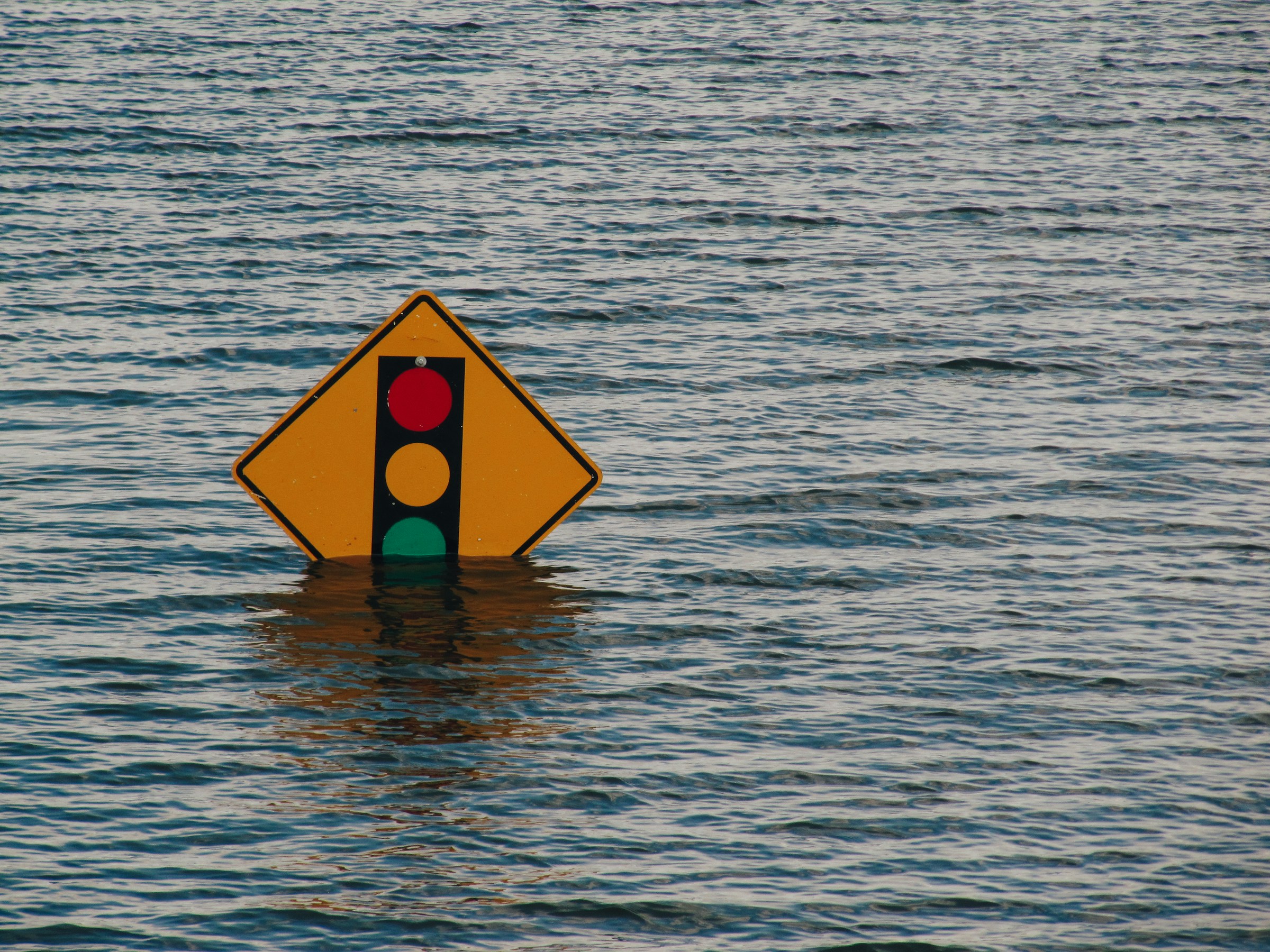
Amid stalled U.S. federal climate engagement and intensifying transatlantic climate risks, subnational diplomacy has emerged as a resilient avenue for cooperation. This article proposes a Transatlantic Subnational Resilience Framework (TSRF) to institutionalize partnerships between U.S. states, cities, private actors and their European Union counterparts. Drawing on precedents in flood control and wildfire management, it outlines how an EU-coordinated governance hub could scale collaboration, transforming fragmented initiatives into a durable transatlantic climate resilience agenda, with potential beneficial spillover effects across broader climate policy.
Introduction
Climate change requires coordinated international responses. Between 2021 and 2023, weather- and climate-related disasters cost an estimated 2.7 billion in the U.S. and 2 billion in the EU. Yet political divisions continue to impede transatlantic climate adaptation, particularly as U.S. federal engagement has stalled and climate change policy grows increasingly contested. For example, the Environmental Protection Agency’s core functions—regulating pollution, conducting environmental research, enforcing compliance, supporting state programs, responding to environmental hazards, and protecting public and environmental health—have been sharply curtailed under the new administration. At the 2025 United Nations General Assembly in September, President Trump called climate change policy “the greatest con job ever perpetrated on the world.” With such open rejection of scientific evidence and the international climate consensus, federal-level transatlantic cooperation appears unlikely.
However, subnational diplomacy has proven remarkably resilient. At the same UN General Assembly, California Governor Gavin Newsom met with numerous international officials, including EU Climate Commissioner Wopke Hoekstra, to reaffirm state-level climate commitments and explore deeper transatlantic cooperation. This outreach illustrates how subnational actors can sustain climate progress even when federal leadership falters. This article therefore proposes a new framework to harness and enhance such collaboration.
A New Framework for Collaboration
In an era of political uncertainty, subnational partnerships between U.S. states and the EU offer a promising alternative channel for climate cooperation. This article introduces the Transatlantic Subnational Resilience Framework (TSRF), a novel approach aimed at strengthening climate adaptation efforts and delivering tangible benefits even in periods of U.S. federal inaction. Subnational actors are already engaging European partners, often with meaningful, if uneven, results that demonstrate both the promise and the limits of decentralized climate diplomacy. A compelling example is the cooperation between California and the European Union during the first Trump administration. In 2018, the European Commission and California signed a Memorandum of Understanding on emissions trading and clean energy, which led to regular technical exchanges, joint workshops on carbon markets, and continued alignment on vehicle emissions standards even as U.S. federal policy moved in the opposite direction. This partnership not only preserved transatlantic policy learning during a period of federal retrenchment but also helped stabilize global confidence in subnational climate leadership. Beyond this case, numerous other initiatives illustrate the emerging architecture of subnational engagement: California’s recent partnership with Denmark on green economy resilience; coalitions such as We Are Still In and the U.S. Climate Alliance; EU-backed initiatives such as the Global Covenant of Mayors and the International Urban Cooperation (IUC), and global networks that include US and EU actors such as the Under2Coalition or the Coalition for High Ambition Multilevel Partnerships (CHAMP) for Climate Action.
Yet these efforts often remain fragmented, underfunded, and institutionally fragile. Entrenched partisan polarization makes consistent federal climate leadership increasingly unlikely. A shift toward “diagonal cooperation”—collaboration between subnational U.S. actors and European regional or supranational entities—is therefore crucial. Backed by the EU and driven by U.S. states, regions and cities, the TSRF could synchronize existing networks such as the Transatlantic Climate Alliance and elevate overlooked initiatives like wildfire prevention and flood control. Subnational diplomacy, which means linking U.S. states, cities, private actors, and EU partners, offers a viable path forward. The TSRF would institutionalize and scale these efforts through a permanent governance anchor capable of tracking commitments, coordinating partnerships, and sustaining innovation across the Atlantic. Before outlining such an institutional backbone, the article turns to sectoral examples that illustrate foundational components of the TSRF.
Sectoral Examples Illustrating TSRF’s Potential
Flood Control and Coastal Protection: Learning from the Dutch Dialogues
Flooding endangers coastal and riverine communities across the Atlantic, yet subnational partnerships have already shown how local actors can connect global expertise to local needs. The Netherlands—renowned for its ability to hold back the North Sea—has become a global leader in water management, and has exported its expertise to flood-vulnerable U.S. states.
After Hurricane Katrina devastated New Orleans in 2005, disproportionately affecting lower-income communities and communities of color, Dutch officials invited Louisianan leaders to tour the Netherlands’ flood management systems to prevent future devastation. This exchange laid the foundation for the Dutch Dialogues: workshops between Dutch engineers and U.S. city planners that reimagined New Orleans’ relationship with water management and strengthened the resilience of at-risk communities. These workshops generated green infrastructure ideas such as wetland restoration and expanded drainage basins, which now shape New Orleans’ current resilience strategy. Similar approaches have since been adopted in Charleston, South Carolina, and Virginia’s Hampton Roads region.
These exchanges show the value of subnational partnerships. Cities like Charleston can collaborate directly with Dutch water authorities and U.S. academics without awaiting federal action. A TSRF would provide sustained support through structured coordination, funding opportunities, and formal governance to ensure durable cooperation beyond shifting political landscapes. A standing Transatlantic Resilience Advisory Committee, composed of regional U.S. officials and EU diplomats, could meet regularly to evaluate pilot proposals, oversee city-to-city partnerships and maintain ongoing transatlantic dialogue. By embedding coordination within an institutionalized forum rather than relying on one-off exchanges, the TSRF would shift collaboration from episodic inspiration to sustained resilience-building.
To support this, the TSRF would create a central coordination mechanism—potentially hosted by EU member states or the European External Action Service. The hub would not impose top-down rules; rather, it would identify shared risks, pool knowledge, and support joint adaptation strategies. U.S. municipalities seeking Dutch-style flood management tools could access EU technical expertise, apply for co-funding from EU adaptation instruments, and obtain logistical support for workshops or site visits. By offering continuity even as U.S. federal priorities shift, the TSRF would sustain long-term, resilient partnerships.
Wildfire Resilience: Shared Strategies from California to the Mediterranean
Wildfires offer another striking example of how the TSRF could enhance cooperation. Both North America and Europe now face increasingly severe fire seasons fueled by climate change. In 2020, California wildfires emitted smoke plumes that crossed the Atlantic; in 2022, 20 EU member states recorded above-average burned areas, including significant fires in Germany, the Czech Republic, and beyond.
Despite these shared challenges, transatlantic wildfire collaboration remains fragmented. The TSRF could facilitate subnational partnerships between wildfire-prone states such as California and European counterparts like Spain, Greece, and Portugal. These partnerships could focus on early warning systems, data exchange, forest management, and firefighting techniques. For example, the EU’s Copernicus Emergency Management Service generates satellite wildfire maps on demand; under the TSRF, U.S. state wildfire agencies could access these during major fire events. Likewise, California’s ALERT California camera network—an AI-enabled early detection tool—could be shared with European civil protection agencies. Sector-specific transatlantic working groups could link California’s Cal Fire with Greece’s fire service to exchange best practices in real time. Such peer-to-peer cooperation would save lives and property, while strengthening public support for climate partnerships despite national political tensions. A governance hub within the TSRF would ensure these partnerships become institutionalized and consistent rather than dependent on individual administrations or crises.
Building Institutional Backbone: An EU-Coordinated Governance Hub
For the TSRF to endure, it must be supported by sustained coordination that can weather fluctuations in U.S. federal policy. A governance hub housed within the European External Action service could serve as this backbone, centralizing progress in two ways.
First, it could track subnational commitments through a publicly accessible registry of climate-resilience pledges by city, state, and region. Beyond simple self-reporting, this system would integrate progress indicators, timelines, and metrics drawn from existing EU adaptation frameworks, enabling more meaningful dialogue with subnational U.S. actors about implementation gaps and opportunities. This effort could incorporate existing networks such as the Climate Alliance and America Is All In, giving subnational initiatives stronger international institutional connections and implementation capacity.
Second, the hub would facilitate structured exchanges and serve as a clearinghouse for technical expertise, partnership matching, and knowledge transfer. It would link wildfire agencies, coastal resilience offices, emergency-response teams, and local disaster-management units across the Atlantic. This structure would move cooperation from informal networking to institutionalized exchange.
Scaling Peer-to-Peer Cooperation: Transatlantic Innovation Exchanges
The TSRF could formalize “climate resilience twinning” arrangements, modeled on sister cities but focused on adaptation rather than cultural exchange. Pairing EU cities or regions with U.S. counterparts that face similar climate risks, such as matching a flood-vulnerable U.S. coastal community with a European city pioneering nature-based flood defenses, would create sustained channels for peer learning and policy transfer. Fellowships, staff exchanges, and recurring Resilience Dialogues would bring stakeholders together to share data, test approaches, and co-develop solutions. These connections would help cooperation persist beyond electoral cycles and enable long-term planning despite federal uncertainty.
Financing Action: A Joint Resilience Investment Fund
To convert plans into action, the TSRF should be backed by a Joint Resilience Investment Fund designed to attract private capital. The recent Clean Investment Monitor Update estimates that U.S. clean energy and transportation investment reached billion in the second quarter of 2025, holding steady relative to 2024 and accounting for 4.8% of total private investment in structures, equipment, and durable goods—indicating substantial private investment capacity.
The fund could mobilize additional private capital from both sides of the Atlantic and support climate-resilience startups and public-private pilot programs. This would provide financial continuity less vulnerable to shifts in federal funding and further embed transatlantic economic collaboration within the TSRF.
Conclusion
In today’s volatile political environment, transatlantic climate resilience requires innovative cooperation beyond traditional U.S.-EU diplomacy. As the climate crisis accelerates, cooperation must adapt and evolve accordingly. Local and regional actors have demonstrated that they can sustain collaboration in politically unstable times. The Transatlantic Subnational Resilience Framework offers a way to institutionalize this momentum by connecting cities, states, and private actors across the Atlantic through a durable framework that shares goals, builds knowledge, and mobilizes resources.
This alliance is not only feasible, it is already emerging in sectoral pockets. What is missing is the connective institutional tissue to coordinate and deepen these partnerships to align them into a more integrated transatlantic resilience agenda, which could spill over into other areas of climate change policy. The TSRF can transform fragmented initiatives into a cohesive resilience strategy, reinvigorating the U.S.-EU relationship and linking communities in a shared mission to confront a profound challenge of our time.
. . .
Jakob Wiedekind joined the University of North Carolina at Chapel Hill as a DAAD Visiting Assistant Professor of Political Science in the summer of 2024. He received his doctorate in 2023 from the Leibniz Universität Hannover, Germany. He is currently working on a project related to climate change policy communication in the transatlantic space, while also continuing his research on American politics and U.S. foreign policy.
Image Credit: Kelly Sikkema, Unsplash Content License, via Unsplash.