
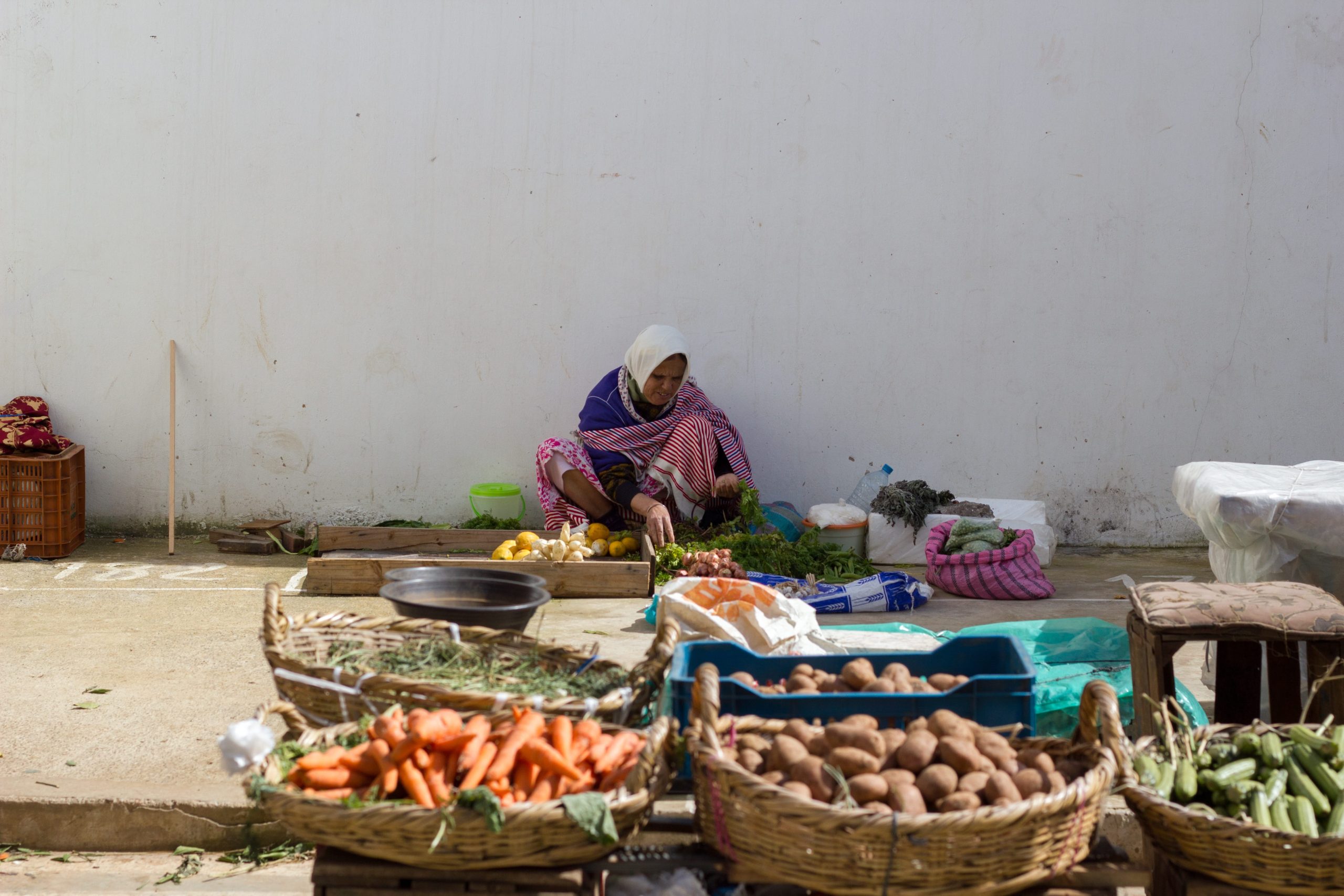
Women and Water in the Maghreb: How the Exclusion of Female Voices Harms Climate Efforts
This paper examines the interrelated crises facing the Maghreb region: water scarcity and gender inequality. It describes the current approach towards addressing water scarcity and how incorporating women’s voices into policymaking from the household to the national level can improve the effectiveness and sustainability of climate adaptation programs aimed at addressing water scarcity.
Introduction
The Maghreb region—comprising Morocco, Algeria, and Tunisia—faces two mutually reinforcing crises: climate change and gender inequality. Within the broader Middle East North Africa (MENA) region, it is among the most climate-vulnerable areas in the world and records some of the largest gender gaps in economic participation, political representation, and access to opportunity. Climate change intensifies these inequalities by threatening livelihoods, increasing displacement and insecurity, and deepening women’s social and economic marginalization. Yet, women remain systematically excluded from policymaking, particularly in climate-sensitive sectors like agriculture and water management, which limits gender-responsive climate adaptation.
This article examines the intersection of gender inequality and water scarcity. It first outlines the scale of the region’s water scarcity crisis and then analyzes women’s exclusion from water governance and agricultural decision-making. Finally, it offers recommendations for integrating women into policymaking to strengthen climate adaptation projects.
Women’s Participation in Water Management in the Maghreb
Water scarcity is among the Maghreb’s most acute climate challenges. All three Maghreb countries rank among the world’s most water-stressed. Morocco and Tunisia are in multi-year droughts and approaching “absolute” water scarcity, while more than one-third of Algeria’s provinces face severe shortages. Decades of dramatically increasing water usage, especially in agriculture—an industry central to the region’s GDP, employment, and food security—have further strained the already limited water supply, pushing the region to a systemic water crisis.
Despite similar water governance structures across the region, typically a combination of national utilities managing urban water and local bodies overseeing rural and area-specific water issues, women remain largely excluded from decision-making. In Morocco, women make up only one-quarter of water and sanitation employees. At the 2006-2007 General Assembly of Water User Associations, only ten women were present; they were seated separately from men and excluded from voting. In Algeria, women make up a larger proportion of employees in the water management space but are concentrated in administrative roles. Their exclusion not only limits representation but also constrains their ability to advance gender-inclusive policies.
These barriers extend to the household and farm level as well. Surveys indicate that less than half of women farmers in Morocco and roughly 40 percent in Tunisia participate in farm decisions. Land ownership disparities are even starker: women own only one percent of rural land in Morocco and approximately five percent across the MENA region. Limited land rights, restricted household decision-making authority, and marginal roles in formal water governance together reinforce women’s structural exclusion.
Socioeconomic and cultural norms further restrict women’s participation. According to USAID specialist Salma Kadiri, employers in agricultural or water sectors often hesitate to hire women for technical roles that require travel or interaction outside the home, citing traditional social expectations about women’s place in society. Moreover, long-held patriarchal views in some communities prohibit women from traveling long distances alone or from interacting with men who are not family members by themselves. These norms effectively narrow women’s access to leadership and technical positions.
Compounding the problem, women’s agricultural contributions are frequently undercounted in official national statistics. As one UN study explains, women do not always self-declare as employed in agriculture and are often mischaracterized as “family laborers,” even when they play a significant role in farm management. Because farm management status is typically assigned to the male head of household, this excludes women from the count of farm operators. Furthermore, evidence also shows that women with advanced degrees and relevant experience are passed over for promotions in water diplomacy and governance. This suggests that women are both undercounted and systematically underused within the water sector.
Water Scarcity’s Disproportionate Impact on Women
These structural barriers are compounded by the disproportionate impact of water scarcity on women. Across the Maghreb, women bear primary responsibility for household water collection and food security while remaining excluded from land ownership, irrigation access, and community-level water governance. Scholars Bernadette Daou and Farah Kobaissy argue that unpredictable climate patterns disproportionately burden women due to “patriarchal gender roles and responsibilities . . . unequal access and control over resources, and exclusion from decision-making spaces.” As water sources diminish, women must walk longer distances to collect water, increasing their exposure to harassment and reducing the time available for schooling, employment, and civic participation. Scholars note that this dynamic reinforces a vicious cycle: exclusion from decision-making limits women’s ability to gain the skills and qualifications necessary to enter governance, while current male-dominated leadership structures produce policies that fail to reflect women’s needs. Despite bearing the direct consequences of poor water management, women remain sidelined from shaping the solutions.
Evidence suggests that greater inclusion of women in decision-making makes water and agricultural output more effective and sustainable. In Morocco, women’s agricultural cooperatives have helped women develop skills that strengthened their livelihoods while promoting more sustainable agriculture practices. Yet across the Maghreb, exclusion from formal water governance persists, reinforcing cycles of scarcity that limit education, civic participation, economic mobility, and pathways to water governance leadership. This ultimately weakens water management outcomes.
The Way Forward
Addressing water scarcity in the Maghreb requires institutionalizing women’s participation in climate and water policymaking. While governments are beginning to recognize this need, implementation remains uneven. In 2015, the Moroccan Water Ministry launched a strategy with UN Women to integrate gender perspectives into the water sector, and in February 2025, Tunisia’s Secretary of State for Water Resources emphasized women’s role in agricultural decision-making. Public support is also growing: a 2022 Kvinna Till Kvinna Foundation regional survey found that 62.5 percent of respondents agreed that climate change “should become a priority issue on the agenda of feminist movements.” Yet meaningful structural reforms have not yet been enacted.
First, formal representation must move beyond quotas to meaningful authority. In Morocco’s Figuig Oasis, for example, women’s influence in Water User Associations remains marginal despite national quotas and gender targets. Expanding women’s influence requires greater recognition of women’s roles in household and farm-level decision-making and cultural normalization of women’s leadership. Over time, consistent promotion into visible decision-making roles can shift public perceptions, reduce stigma, and create pathways for women into technical and financial leadership positions within the sector.
Second, improving women’s access to land ownership is another important step toward strengthening their participation in water governance and climate adaptation. This can be achieved by reforming inheritance laws and land registration processes that currently disadvantage women. Across the Maghreb, legal restrictions often limit women to inheriting only half the share of men, and in practice, land instead frequently bypasses women altogether as property is transferred almost exclusively along male lines. Reforming these barriers would enhance women’s economic security and provide the material foundation necessary to participate meaningfully in decisions about irrigation, agricultural investment, and climate adaptation.
Third, expanding access to technical training can help women better engage in water policymaking. Donors and governments can address this by funding targeted training programs for women, embedding gender specialists in relevant government ministries, building partnerships with countries that have successfully advanced gender equality in resource governance, and supporting regional or public-private initiatives, water-related initiatives. Complementary gender-awareness training for both men and women, such as mapping water-related labor roles, access to water resources, and legal rights, can further help address structural inequalities that restrict women’s participation in water governance.
Finally, civil society networks in the Maghreb need strengthening. The Maghreb hosts hundreds of climate and feminist organizations, yet limited coordination and insufficient civic infrastructure constrain their collective impact. To address this, donors can support women’s cooperatives and collectives and foster cross-border networks of water governance groups that help activists collaborate and learn from one another.
Conclusion
International organizations, including the Food and Agriculture Organization and the Global Water Partnership, have promoted gender-transformative approaches to water management in the Maghreb. These efforts include addressing structural barriers to women’s inclusion, engaging men in shifting societal norms, improving gender-disaggregated data, and reforming institutional policies and attitudes. But there is much more work that can be done. Expanding the network of women’s agricultural cooperatives, improving access to financing for land ownership, and explicitly linking water scarcity to gender inequality in national strategies can help build the political will necessary for more effective and sustainable climate action. Ensuring women’s meaningful access to legislation and policymaking is essential to building resilient water systems in the Maghreb.
. . .
Sarah Yerkes is a Senior Fellow in the Middle East Program at the Carnegie Endowment for International Peace. She is the editor of Geopolitics and Governance in North Africa (Edinburgh University Press, 2023) and the author of a forthcoming book examining the role of external actors in influencing the first decade of democratic transition around the globe.
Image Credit: CC BY-SA 2.0, via Piqsels