
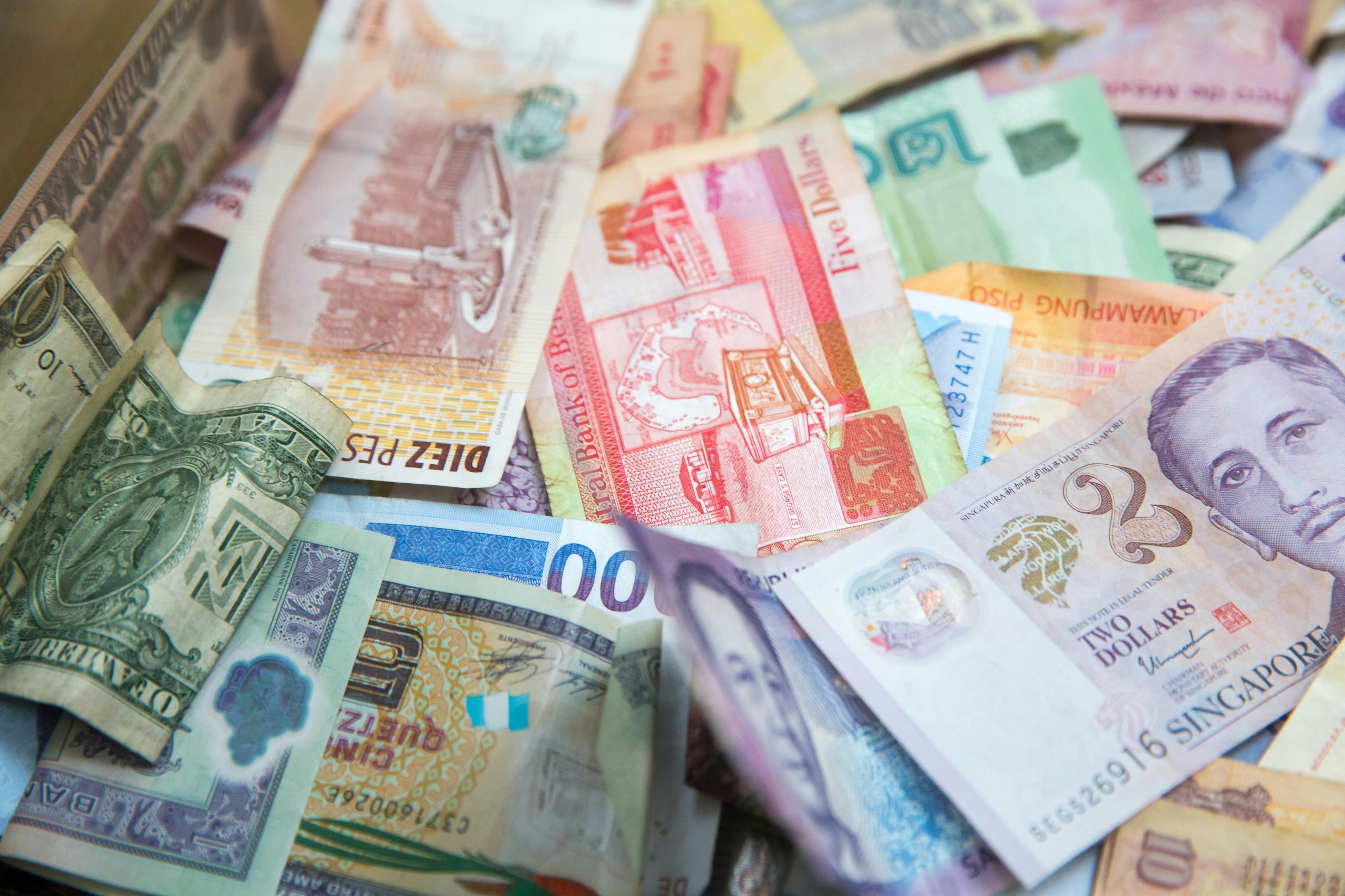
Investment and Statecraft: The International Politics of Sovereign Wealth Funds
In 1953, Kuwait established the world’s first sovereign wealth fund to invest the country’s oil revenues and generate returns that would reduce its reliance on a single resource. Since then, over 100 separate funds have been created to preserve national wealth and ensure long-term fiscal sustainability. Today, they manage over trillion in global assets. In this discussion with GJIA, political economist Kathryn Lavelle explains the increasingly novel dynamics that surround fund behavior and what the world can come to expect from their growing presence in international financial markets.
GJIA: When it comes to the roles sovereign wealth funds (SWFs) play in global markets and politics, what would you say makes them unique?
Kathryn Lavelle: Sovereign wealth funds (SWFs) operate on behalf of governments as investors. That in itself is an unlikely relationship. Within them, a core contest takes place between the state’s interests (or sovereign) part of the dynamic, and the money interests (or wealth) part of it, and these two aspects are frequently in contradiction, serving fundamentally different goals. SWFs are also quite fascinating because when you talk to the people who manage these funds, they have an interest in convincing you that the decisions are made almost exclusively on a financial basis—they really will go to great lengths to differentiate their government owners from those who make the management decisions. At the same time, these people ultimately answer to someone in power. Therefore, for most SWFs, it remains deeply unclear who is actually making the investment decisions and for what purposes. Of course, it is not always clear how other vehicles, such as hedge funds and private equity make the decisions they do, but I think what a lot of people find particularly disconcerting about SWFs is that they seem to act on behalf of people who have a different identity from their own. People who could be trying to manipulate politics and markets in a way that would have a long-term effect on their own populations. Regular investors come and go at will, and they only share an interest in profit as far as most of us understand. However, SWFs have that extra “sovereign” part right behind them that obscures their true interest.
GJIA: These funds can be found in countries all across the globe, in both authoritarian states and democracies. Would you say SWFs differ in their goals and structures between regime-type?
KL: It is not necessarily regime type that makes the goals and structures of SWFs different. It has to do with their structure. Let’s look at a country like China. There’s going to be a debate about exactly how to characterize the regime, but it is a country with many different kinds of sovereign wealth funds, and a particularly opaque state connection to each. At one time, some of the state-owned Chinese oil companies created specialized investment vehicles listed outside Chinese markets that excluded parts of the firms that were more associated with human rights violations. At the same time, the China Investment Corporation (CIC)—China’s largest SWF—draws a lot of concern, not necessarily because of its investment activities, but because of the dynamics of global politics. So, I wouldn’t really tie differences to regime types themselves in a wholesale way, but rather to how such funds are perceived and how they are structured. Saudi Arabia’s SWF is getting all kinds of attention for its involvement in Hollywood, and this takes me right back to when I was a student in the 1980s, when people were concerned about Japanese investment entities buying assets in Hollywood. They aren’t quite the same in financial terms, but it’s the same kind of concern about foreign investment that drives people to be suspicious, and the whole idea that “foreigners are influencing Hollywood.” This holds true across industries, and it reflects where politics are in places like the United States right now.
One metric we can try to look at is transparency, where all the funds will tell you, “we are transparent.” The problem you’ll keep running into with this approach is how you value things. When trying to do comparative studies of equity markets, you’ll find that every country doesn’t use Generally Accepted Accounting Principles like we do in the United States. A fund may appear opaque politically and not want people to show what they’re invested in or what their intent with that investment is, but they could also just not be able to report it because of the way it was purchased, or the kinds of shares they purchased. There are some assets out there that really are difficult to put a monetary value on.
GJIA: To what extent do domestic politics shape SWF behavior in both the investing “home” country and the recipient “host” country?
KL: This depends on the type of fund present and also on the extent to which voters’ political views are able to influence the fund. For example, in a democratic home state like Norway, the SWF doesn’t invest in nuclear weapons or tobacco because of social concerns, but there is a continuing debate over whether it should invest in oil, even though that’s where most of the money comes from. The degree to which Norway will continue to make those investments, and whether they contradict the government’s overall climate goals, is an open question in Norwegian politics. Because of the way the fund’s governance is structured, it may not be easy to resolve. On the other hand, some people consider pension funds, like the State Teachers Retirement System (STRS) in Ohio, to be quasi-SWFs. They have a very strict separation between the people who make up the management division and the fund owners. No teacher or professor would want to invest in things that may harm the future of their students. At the same time, a fund manager might see an opportunity in a diversified multinational corporation that offers a good return, despite it deriving part of its revenue from e-cigarettes. These contests are very apparent.
Domestic politics can work in host countries too. A good example is Singapore’s SWF, Temasek, investing in Thailand’s telecommunications sector. If you study political economy, you already know that countries everywhere are uncomfortable with foreign ownership of their telecom sectors because a foreign entity could monitor or manipulate our communications with each other. In the case of Temasek, there was significant pushback from Thai citizens surrounding the deal, which went on to influence national political sentiment toward Singapore as a whole, underscoring the risks some SWFs may face with their investment choices. In this case, fund behavior led to the dissolution of the entire Thai government in 2006 and a subsequent coup d’état.
GJIA: To address some of this unease, the Santiago Principles were established in 2009 to ostensibly promote trust and transparency. From your perspective, have these mechanisms actually changed fund behavior?
KL: In international relations theory, we always like to have a clear set of norms and best practices—the orientation we want the proverbial ship to be sailing in. In that regard, the Santiago Principles at least got the discussion going about which direction SWFs should take at a time when people were very skittish about the growing size of these funds. Nobody wanted them to be out there and potentially destabilizing economies, so talks about disclosure, conditions for withdrawal, and the independence of managers were helpful when initiated. The biggest stumbling block was that there wasn’t exactly a good way to measure compliance with the Principles, let alone how to hold funds to them. If you read the Principles, they’re overall quite vague. In general, a fund doesn’t want to reveal how and why they make certain investment decisions because that information is proprietary—a fund makes money off of how and why it makes decisions—so how do you reconcile that with loosely-defined ideas of openness? Some decisions might have a political purpose. The bottom line is that trying to figure out and assign a score to compliance is not easy, and it is therefore the reason why the Santiago Principles never really got off the ground to the point where they could truly direct fund behavior.
GJIA: Many emerging markets are looking to build their own SWFs from mineral and oil revenues. Historically, have funds shaped development trajectories in these countries?
KL: I think the big story in international emerging markets investment is that the investment is increasingly no longer unidirectional. In the past multinational corporations of primarily Western background were the main form of foreign direct investment in a country. That has changed dramatically, to the point where you have companies from so-called “developing countries” taking over companies in the United States. Therefore, the landscape of international investment has changed, and I think SWFs are certainly a possibility to be the next step in the game. Historically, you didn’t need an entire financial vehicle to reinvest commodity revenues in your country, but as emerging markets get more financially sophisticated, their capacity to operate such funds has increased. SWFs would allow treasuries to move from relying on holding foreign exchange assets like cash or government bonds to having broader financial markets and targeted growth areas, while easing pressure on welfare expenditures.
GJIA: With their increasing financial weight, do you see the presence of SWFs being a factor in the political choices leaders will have to make with regard to domestic and foreign policy?
KL: It will depend on just how big the funds get. One of the reasons people are already apprehensive is because of their scale, and if certain SWFs in certain countries achieve a large-enough size, the presence will absolutely be cause for concern. The other factor political leaders will have to consider are their objectives. It’s not always clear how to define a SWF, or even where its activity is concentrated, but it is certainly a worry from the perspective of national security of opaque external investment.
More than that, I think one of the most interesting questions going forward is whether the United States, the home to the world’s largest financial markets, will develop its own fund, for which the Trump administration announced a plan. There have also been several proposals in Congress. Were it to come into being, it would have tremendous weight. At the same time, one of the hallmarks of U.S. capitalism is a lack of government ownership of shares, so it would not be clear how such a fund would be received in domestic politics, or which direction it would take. Given how politically fragmented the country is, a Democratic administration would likely be concerned about different sectors of the economy, such as healthcare, and want investment there, rather than a Republican administration, which might prefer defense industries. No investment vehicle could thrive under conditions of such instability. Moreover, it remains unclear where the money to fund a theoretical U.S. SWF would come from. It would be a fundamentally different entity depending on whether it is financed with debt, economic surplus, commodities, or the sale of state companies, as in the case of Singapore. If it is debt, or government borrowing of some form, then the fund would have to outperform whatever the cost of that debt is, which is not an easy thing to do.
I think our political leaders have enough on their plate. Our system has worked well keeping political and investment functions generally separate. We have seen different forms of business rise and fall, and even the perception of different countries, all of which funds are tied to. Unless a major SWF either starts—like in the case of the United States—or collapses—an issue that concerns the Saudis, I don’t see any political tsunamis on the horizon.
. . .
Kathryn Lavelle is the Ellen and Dixon Long Professor of World Affairs at Case Western Reserve University in Cleveland, Ohio. Her research explores the exchange between domestic and international and political institutions with a particular emphasis on political economy and multilateralism. Dr. Lavelle’s first book, The Politics of Equity Finance in Emerging Markets, explored the political circumstances that surround large issues of stock in the developing world. After being granted tenure at Case Western, she was awarded an American Political Science Association Congressional Fellowship and named the William A. Steiger fellow, a designation given to the most promising political scientist in her class of fellows. While in Washington during 2006-2007, she worked on the staff of the House Committee on Financial Services on issues related to domestic and international monetary policy.
Dr. Lavelle holds a PhD in political science from Northwestern University; an M.A. in government and foreign affairs from the University of Virginia; and a bachelor’s degree in international economics from Georgetown University. She is a permanent member of the New York Council on Foreign Relations.
This transcript has been lightly edited for clarity and length.
Interview conducted by Sid Mehrotra.
Image Credit: Jason Leung, Unsplash Content Licenses, via Unsplash